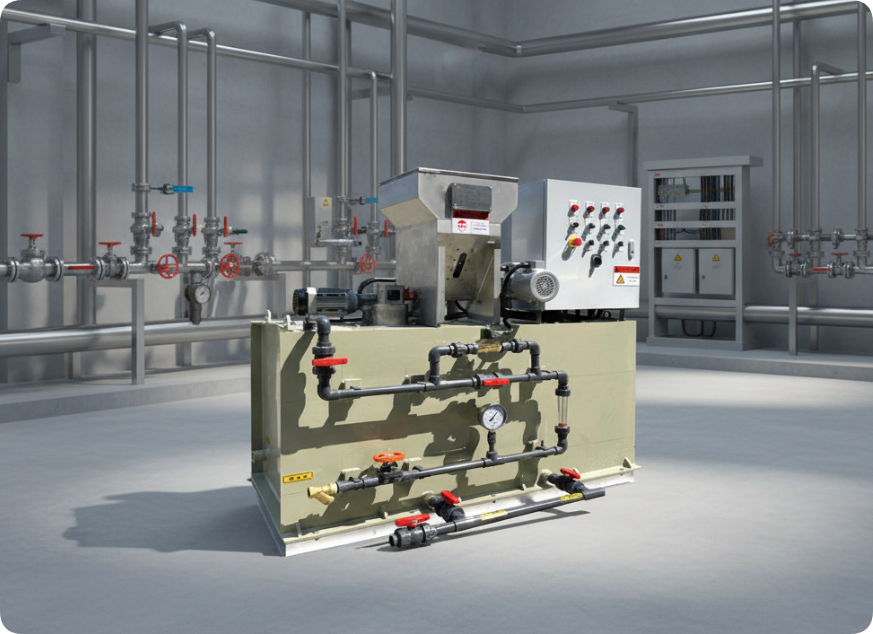
Dilution Water Headbox
What is a Dilution Water Headbox?
The dilution water headbox is the "heart" and "brain" of a modern high-speed paper machine. Its core breakthrough lies in replacing the traditional "lip plate opening adjustment" with "concentration adjustment" to control the cross-sectional basis weight of the paper. This technology changes the pulp concentration by locally adding dilution water to the headbox, achieving precise, online control of the paper's cross-sectional basis weight. This is a crucial step in the transition of paper machines from analog control to digital precision control.
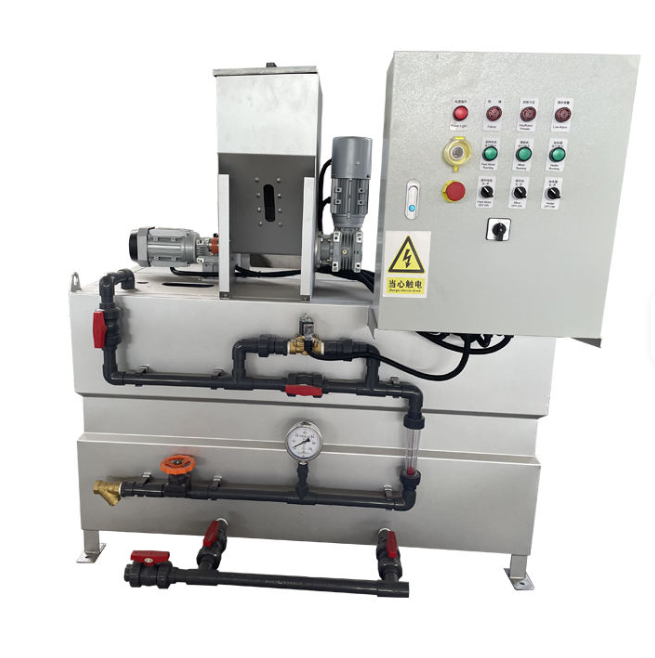
What are the uses of a dilution water headbox?
Located at the end of the "flow" section and the beginning of the "forming" section of the paper machine, the dilution water headbox bears the crucial responsibility of laying a uniform foundation for subsequent paper sheet formation:
Precise control of paper cross-sectional basis weight: This is its most essential use. By adjusting the transversely arranged dilution water valves, the amount of oven-dry fiber at each corresponding point on the cross-section of the paper sheet can be independently controlled, resulting in an extremely uniform basis weight distribution.
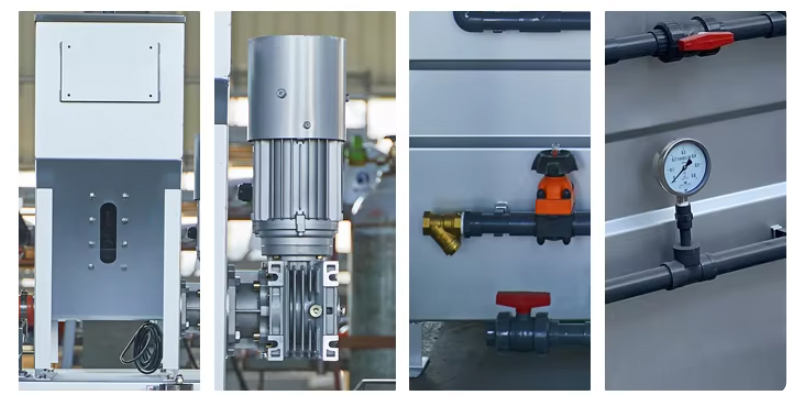
Adaptation to high-speed paper machine production: On high-speed paper machines with speeds exceeding 1000 meters per minute, the inertia and limitations of traditional mechanical adjustments are difficult to overcome. The "contactless" adjustment method of the dilution water headbox perfectly solves the problem of cross-flow basis weight control at high speeds, ensuring stable paper machine operation.
Producing high-quality paper: Widely used in the production of cultural paper, high-grade packaging paper and paperboard, specialty paper, and other paper types with extremely high quality requirements, it is a key guarantee for achieving good paper uniformity, high strength, and stable performance.
The working principle of the dilution water headbox can be summarized as "total pressure determines the longitudinal direction, dilution adjusts the transverse direction," achieving quality targets through precise fluid control:
Uniform pulp distribution and fiber dispersion: Pulp with a concentration of approximately 0.4%-1.0% enters the headbox from the conical feed manifold. Through components such as tube bundles and turbulence generators, the pulp is evenly distributed and generates high-intensity micro-turbulence, fully dispersing the fibers, preventing flocculation, and preparing for uniform forming.
Precise addition of dilution water (key to transverse basis weight control): This is the most crucial step. As the pulp passes through the tube bundles or mixing chamber, low-concentration white water (dilution water) is injected into the corresponding branch pulp pipes through a row of transversely arranged dilution water valves.
Control Logic: When the QCS (Quality Control System) detects a high basis weight at a certain point on the paper web, the corresponding dilution water valve will open wider as set, injecting more dilution water to locally reduce the pulp concentration at that point, thereby lowering the basis weight of the paper at that point after forming. The reverse is also true.
Core Advantage: This adjustment method does not change the total flow rate and velocity of the pulp, therefore it does not affect the directional arrangement of fibers on the wire, ensuring the stability of the paper's longitudinal and transverse physical properties.
Stable Spraying and Forming: After concentration adjustment and thorough mixing, the pulp is sprayed from the lip plate of the headbox onto the designated position on the forming wire, initiating dewatering and forming. Throughout the process, the headbox control system (such as DCS) must also synchronously control parameters such as total pressure, pulp-wire speed difference, and temperature to ensure spraying stability.
What are the advantages of a dilution water headbox?
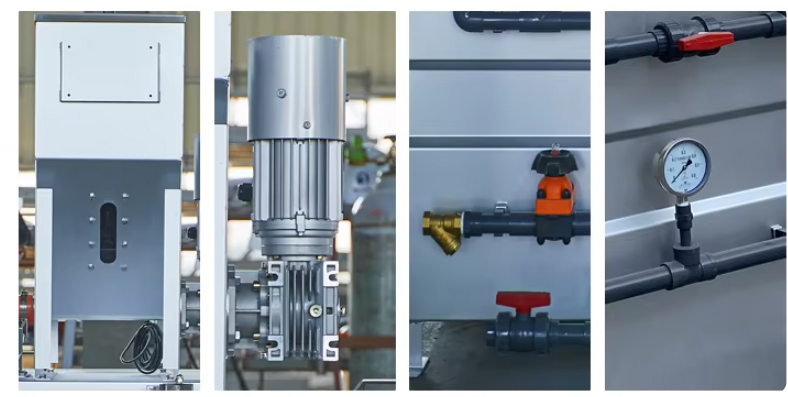
Compared to traditional headboxes that adjust the local opening of the upper lip plate, the dilution water headbox has significant generational advantages:
| Advantage Dimension | Description |
| Significantly Improved Control Accuracy |
1. High resolution and fast response: The spacing of dilution water valves is usually smaller than that of traditional slice lip adjusters (for example, 61 valves), providing finer control zones and higher adjustment accuracy. 2. No mechanical backlash: Valve opening is controlled by electrical signals, avoiding the lag and accuracy loss caused by mechanical adjustments. |
| Significant Improvement in Paper Quality |
1. Very small cross-direction basis weight variation: The full-width basis weight deviation can generally be controlled within ±1%, creating optimal conditions for subsequent processes. 2. Stable fiber orientation: Since the local pulp flow is not changed, the fiber orientation on the wire remains consistent, resulting in a more stable MD/CD tensile ratio and better printing performance. |
| Optimized Operating Performance and Efficiency |
1. Suitable for higher machine speeds: Effectively solves problems such as edge warping and unstable jet flow caused by traditional slice lip adjustments at high speeds. 2. Fully automatic online closed-loop control: It can be integrated with the QCS system to realize automatic cross-direction basis weight control, reducing manual intervention. |
| Easier Equipment Maintenance | Avoid slice lip deformation: Frequent mechanical adjustment of traditional systems may cause permanent deformation of the expensive top slice lip, while dilution water control is a non-contact adjustment method that significantly extends component service life. |