Symons Cone Crusher vs Hydraulic Cone Crusher: Which One Is Right for You?
Wednesday September-02 2026 09:44:28
On a tight budget but need to process hard rock? The choice between a Symons Cone Crusher and a Hydraulic Cone Crusher can make or break your operation. Getting it wrong doesn't just affect throughput—you could end up with frequent jams because the crusher lacks enough crushing force, or you might overspend on a hydraulic model that sits idle most of the time.
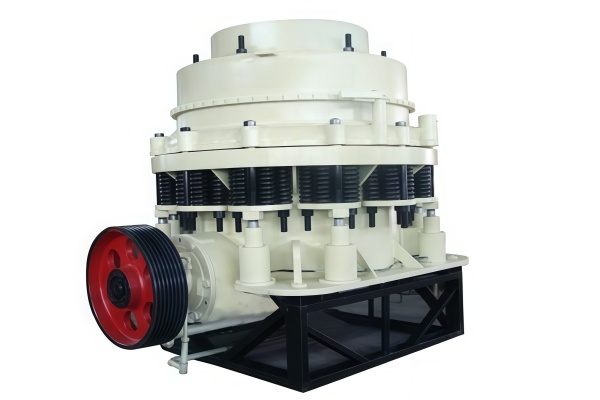
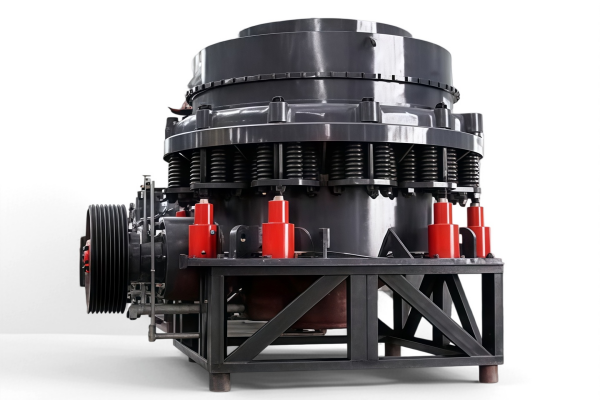
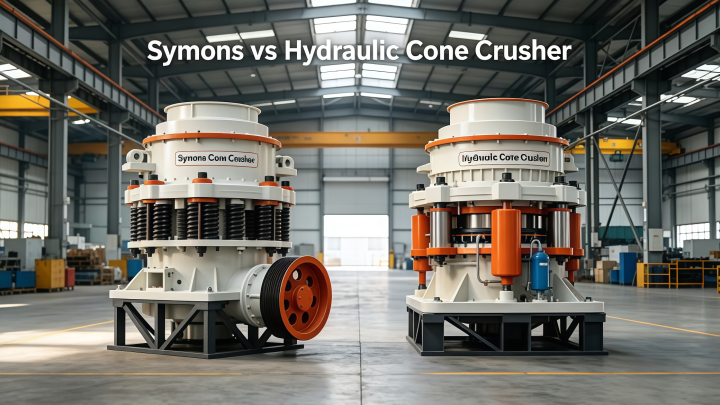
The spring‑type Symons Cone Crusher, a classic design with over half a century of global use, relies on springs for overload protection and is known for its simple construction. The more recent Hydraulic Cone Crusher uses hydraulic cylinders for discharge adjustment and tramp iron release, offering higher automation.
Though both work on the same compression principle, they differ greatly in adjustment methods, protection mechanisms, operating costs, and suitable conditions. This article compares them from three angles—structural principles, key parameters, and real‑world applications—to help you make the right decision.
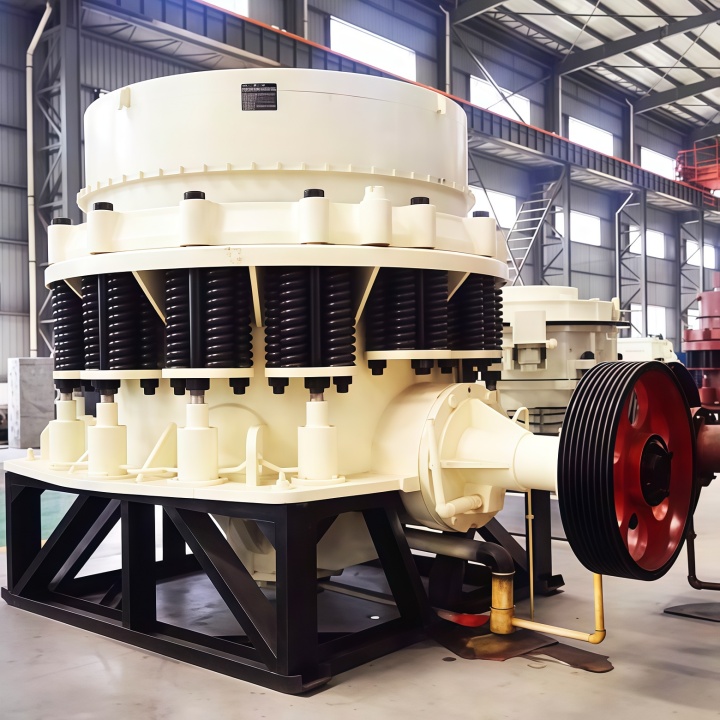
Strengths and Weaknesses of the Symons Cone Crusher
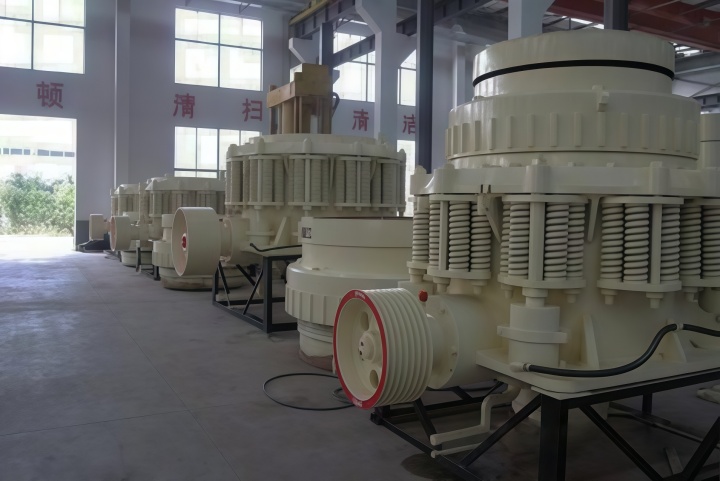
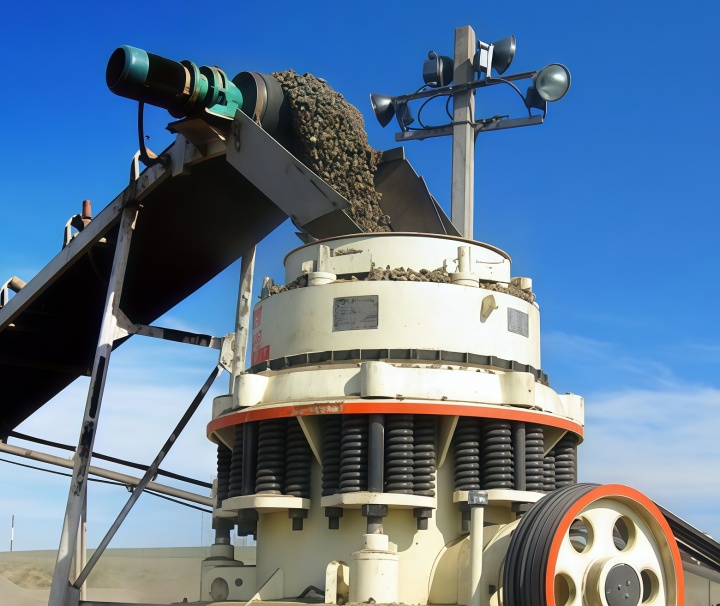
This model uses springs as overload protection: when an uncrushable object enters the chamber, the springs compress, allowing the mantle to rise and discharge the material, then automatically reset. This purely mechanical system offers three advantages: lower purchase cost compared to a hydraulic model of the same size; low maintenance barrier—any workshop at a mining site worldwide can handle common failures; and reliable operation with no hydraulic leaks or electronic control issues.
However, this spring model has clear limitations. Its main shaft is cantilever‑supported, making the whole machine much heavier than a single‑cylinder hydraulic model of the same size, while crushing force and throughput per hour are relatively limited. Discharge setting adjustments require shutting down the machine and adding or removing shims, which takes considerable time.
For tramp iron protection, the spring stroke is limited, and the response is slower than that of the hydraulic type for large uncrushable objects. For these reasons, the Symons Cone Crusher is better suited for small to medium‑sized mines, less strict product gradation, and secondary or tertiary crushing.
Technology Upgrades and Suitable Applications of the Hydraulic Cone Crusher
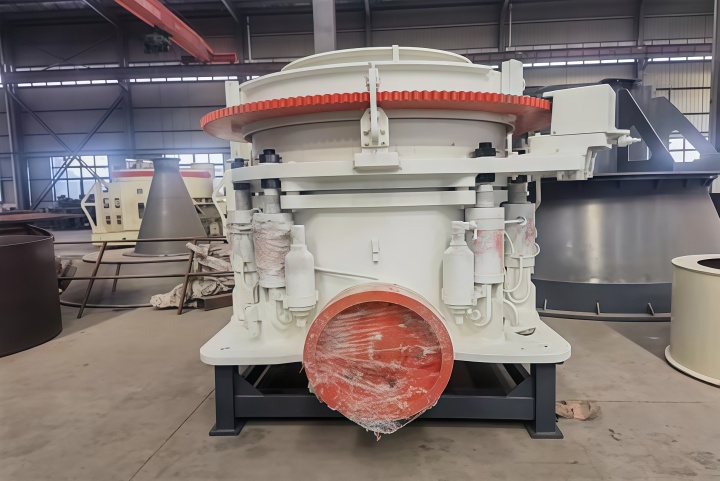
The Hydraulic Cone Crusher replaces the spring system with hydraulic cylinders, enabling on‑the‑fly discharge adjustment and automatic clearing of the chamber. When uncrushable material enters, the hydraulic cylinders lift the main shaft instantly to discharge the tramp iron and then automatically reset—the whole process takes only a few minutes, whereas the spring model may require shutdown and manual disassembly.
In terms of crushing efficiency, this hydraulic version, with its optimised chamber design and higher speed, delivers higher throughput and better product shape at the same power consumption. Multi‑cylinder models are ideal for large continuous operations, while single‑cylinder versions are more compact and automated.
But the purchase cost of the hydraulic type is higher than that of the spring type, and the hydraulic system demands cleaner oil and more skilled maintenance. For small to medium‑sized plants with simpler operations and limited capabilities, the overall benefits of the hydraulic version may not be fully realised.
Key Parameter Comparison: Symons Cone Crusher vs Hydraulic Cone Crusher
| Feature | Symons Cone Crusher | Hydraulic Cone Crusher |
|---|---|---|
| Overload protection | Spring mechanical | Hydraulic cylinder, automatic |
| Discharge adjustment | Manual, after shutdown | On-the-fly, one-button |
| Tramp iron clearing time | 30 minutes or more | A few minutes, auto-reset |
| Discharge opening (common) | 6-40 mm | 8-50 mm |
| Motor power (common) | 75-315 kW | 90-400 kW |
| Relative capacity | Baseline | About 20% higher |
| Structural complexity | Low, parts widely available | High, many seals |
| Purchase & maintenance cost | Both lower | Both higher |
Take the HP300 hydraulic model as an example: its feed opening is 215 mm, discharge range 13‑51 mm, motor power 250 kW, and capacity 120‑360 t/h.
The wider discharge range of the hydraulic version allows for a broader product size spectrum. Its higher motor power ceiling correlates with greater crushing force and output.
Key Factors to Consider When Choosing
The decision hinges on your feed material's hardness, your planned operating hours, the maintenance skills available at your site, and your balance between initial investment and long‑term operating costs.
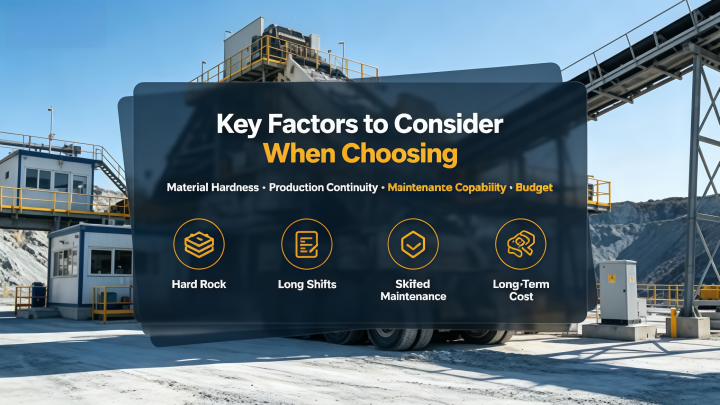
Material hardness: For hard, abrasive rocks like granite or basalt with high throughput, choose the hydraulic type. For medium‑hard materials like limestone, the Symons Cone Crusher is sufficient.
Production continuity: For long continuous shifts, choose the hydraulic model; for intermittent production, choose the spring type.
Maintenance capability: Choose the spring model if you have only general mechanics and spare parts are hard to source. Opt for the hydraulic version if you have dedicated hydraulic engineers.
Budget:If initial investment is tight, go with the spring type. If you prioritise long‑term cost per tonne, choose the hydraulic model.
Real‑World Application Cases
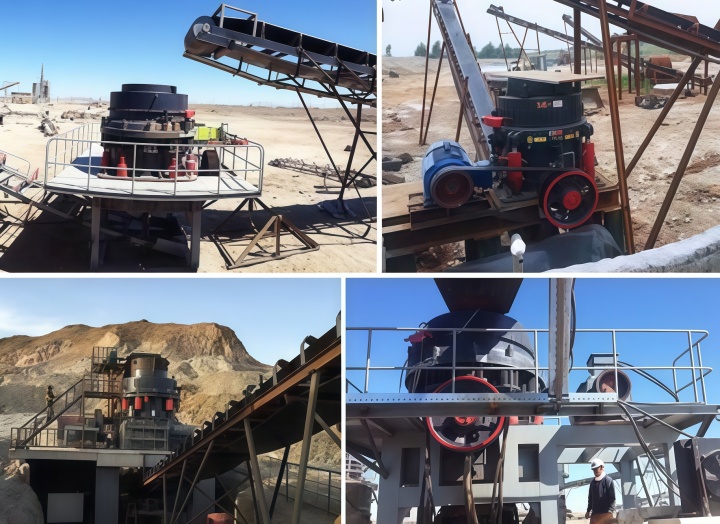
Case 1 – South America: A medium‑sized copper concentrator processes medium‑hard oxide ore at 1,500 tpd. The site has only three general maintenance workers, and spare parts must be transported over 500 km from the capital. The plant chose a Symons Cone Crusher for secondary crushing. Over three years, they replaced only one set of liners and one set of springs, and supply never failed. Data comes from six consecutive months of on‑site records.
Case 2 – Australia:A granite aggregate project designed for 3,000 tpd required products to pass strict flakiness tests for high‑grade road aggregates. The project initially tested a spring cone, but the particle shape failed. After switching to a single‑cylinder hydraulic model, the product passed, and energy per tonne was nearly 10% lower than with the spring model.
Quick Selection Guide for Different Conditions
Hard rocks (granite, basalt) with >2,000 tpd → choose hydraulic type
Medium‑hard rocks (limestone) with <1,500 tpd → choose Symons Cone Crusher
Long continuous shifts → choose multi‑cylinder hydraulic
Intermittent shifts → choose spring type
Strict flakiness requirements → choose hydraulic version
Remote sites far from suppliers → choose spring type
Frequently Asked Questions
How long does it take for a Symons Cone Crusher to resume production after tramp iron?
Manual cleaning usually takes 30 minutes or more, while the hydraulic version resets within minutes.
Are spare parts for a Symons Cone Crusher easy to find?
Yes, due to its huge global installed base, parts are widely available; the hydraulic type often requires specialised sourcing.
Which crusher has faster liner wear when processing hard rock?
The spring model tends to have lower hourly wear per set of liners, but the hydraulic version often shows lower liner consumption per tonne produced.
Can a Symons Cone Crusher handle moist feed?
Its water‑seal design can mix water with oil when processing damp material, raising failure risk. The hydraulic model, with dry sealing, handles moist feed better.
Closing Thoughts
There is no absolute winner between the spring cone and the hydraulic type—it all depends on your needs. The Symons Cone Crusher offers lower cost and easier maintenance, ideal for budget‑conscious, small‑scale operations. The Hydraulic Cone Crusher excels in efficiency and automation, suited for large, continuous projects.
The key is to honestly assess your material, production targets, maintenance capabilities, and investment capacity. Work through the dimensions above to find the model that fits. If you would like more detailed technical data or tailored advice, feel free to reach out.