Single Shaft vs Double Shaft Shredder: 6 Key Factors to Choose the Right Crusher for Plastic, Tire & Metal 2026
Saturday August-22 2026 11:41:12
For clean plastics, films, and wood with strict particle size requirements, choose Single Shaft Shredder. For tires, metals, e‑waste, and other complex mixed materials where primary size reduction is the main goal, choose Double Shaft Shredder Crusher. For complex feedstocks that also require uniform output, a two‑stage configuration is the most cost‑effective option.
Our factory has tested the shredding performance of dozens of materials and handled numerous customer retrofit projects after they purchased the wrong equipment. This article covers six key dimensions, backed by real test data and on‑site feedback, to help you avoid costly mistakes.
In the recycling industry, overpaying for equipment is not the real risk. The real risk is bringing in a machine that cannot handle your material. The fundamental difference between single‑shaft and double‑shaft shredders is not about price, but about the fact that they were built to solve completely different shredding logic.
According to the national standard GB/T 25936.3‑2024 "Rubber and plastics machines — Size reduction machines — Part 3: Safety requirements for shredders," shredder design and manufacturing must meet safety requirements throughout the entire life cycle. Below are six key comparison dimensions our factory has accumulated through equipment integration and customer follow‑up.
Fundamental Difference in Working Principle
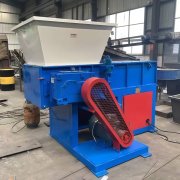
Single Shaft Shredder uses a single rotating cutter shaft paired with fixed blades mounted on the housing. A hydraulic ram pushes material repeatedly toward the cutter shaft until it is cut small enough to pass through the screen. Speed ranges from 60 to 150 RPM, with power from 30 to 250 kW.
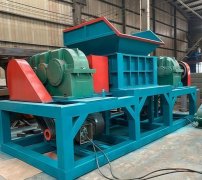
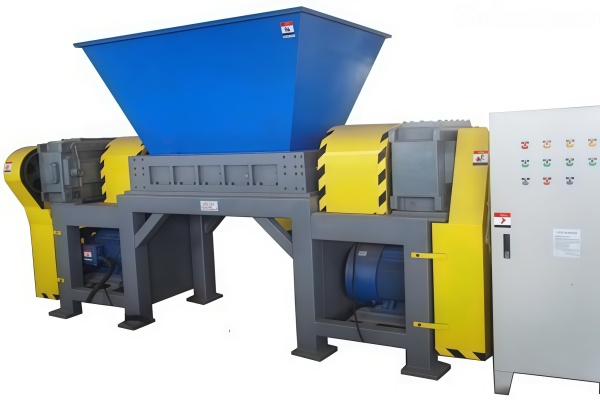
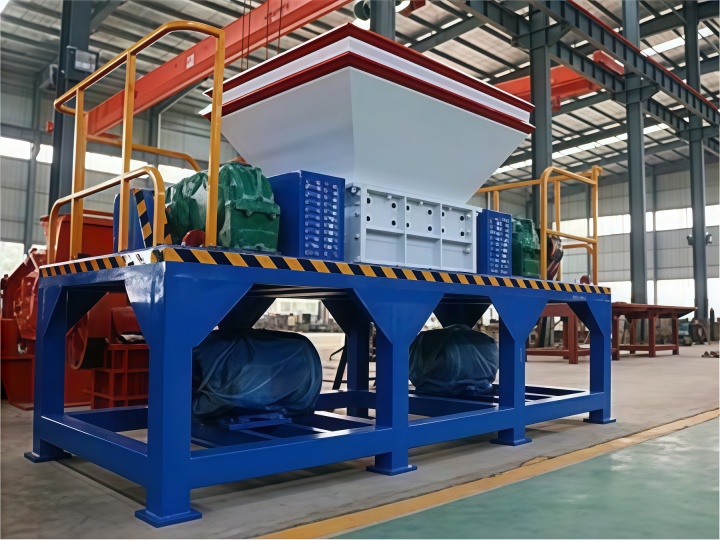
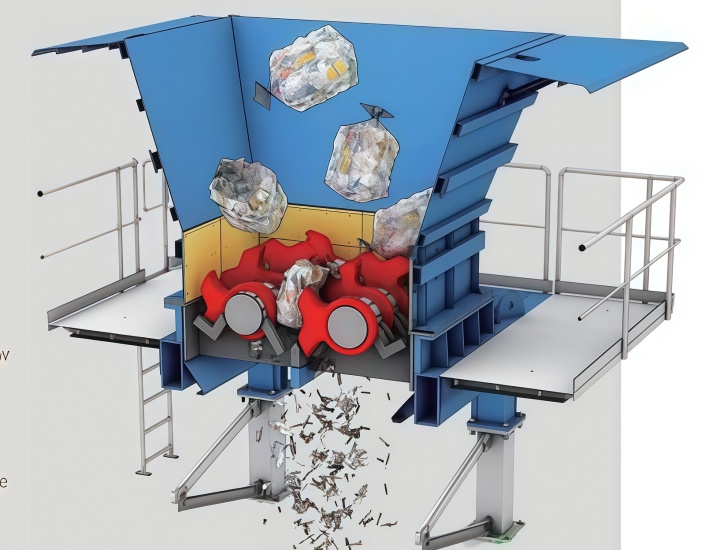
Double Shaft Shredder Crusher uses two counter‑rotating, low‑speed shafts that tear, rip, and crush material through the interlocking action of the cutter teeth. Speed is only 10 to 40 RPM, with power from 44 to 400 kW. Material is pulled in automatically by the shafts, requiring no ram feeder. One cuts, the other rips — fundamentally different approaches.
Material Suitability
Single Shaft Shredder excels at handling clean, uniform, and flexible materials — plastic pipes, films, woven bags, waste paper, wooden pallets, and clean rubber. Throughput ranges from 300 to 3,000 kg per hour. But it struggles with hard contaminants; metal or stones entering the cutting chamber will damage the blades.
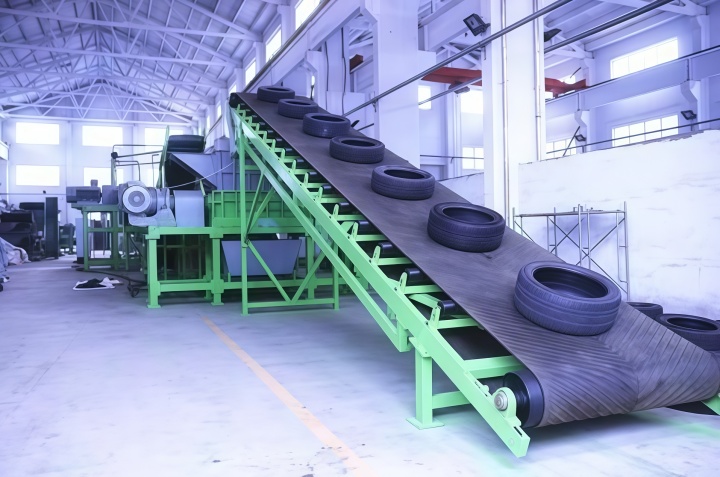
Double Shaft Shredder Crusher is built for tough materials — steel‑belted tires, automotive shells, mixed metal scrap, e‑waste, and bulky industrial waste. Throughput ranges from 500 to 10,000 kg per hour. The Ministry of Industry and Information Technology's "Specification Conditions for the Comprehensive Utilization of Waste Tires" explicitly requires that waste tire shredding, pulverizing, and grading adopt automated technology and equipment — precisely the type of application we are discussing here.
Our factory tested steel‑belted tires. When steel wire content exceeds eight percent, Single Shaft Shredder blade wear accelerates more than three times faster than when processing clean rubber. Under the same conditions, the double‑shaft unit runs smoothly with virtually no impact on blade life.
To be clear: the dividing line between single‑shaft and double‑shaft is not about which is "better," but about what material you are processing. Clean materials go to single‑shaft; mixed or contaminated materials go to double‑shaft.
Output Particle Size Control
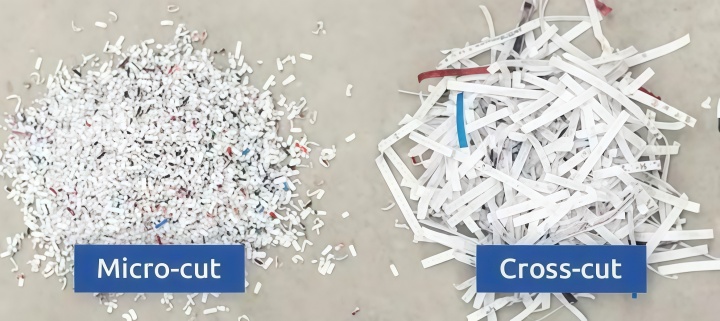
Single Shaft Shredder, with its screen control, delivers output sizes from 20 to 120 mm with uniformity above ninety‑five percent, allowing direct feeding into granulators or washing lines.
Double Shaft Shredder Crusher has no screen, producing output from 30 to 300 mm and above, with inconsistent particle sizes. If the coarse output from a double‑shaft unit is fed directly into a granulator, blade wear accelerates noticeably. One of our customers switched to a two‑stage configuration with a double‑shaft unit plus a single‑shaft unit, and their overall line efficiency improved by approximately forty percent.
If you need uniform output in one step, choose single‑shaft. If you only need primary size reduction with further processing downstream, choose double‑shaft. If you need both, go with a two‑stage configuration.
Throughput and Energy Consumption
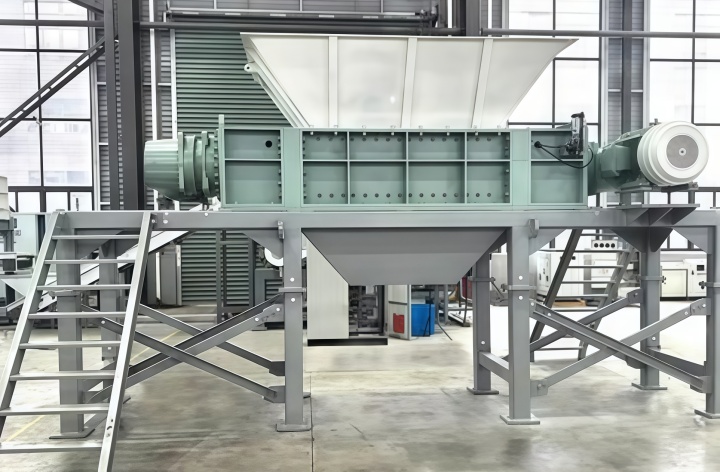
In terms of processing capacity, double‑shaft units outperform single‑shaft units, typically by 2 to 5 times. But there is an easily overlooked metric: throughput. The throughput of a Single Shaft Shredder is typically about twice that of a Double Shaft Shredder Crusher — referring to the volume of material passing through per unit of time. The single‑shaft unit processes faster, just in smaller batches.
In terms of energy consumption, single‑shaft units typically consume 15 to 25 kWh per ton, while double‑shaft units consume 25 to 35 kWh per ton. Double‑shaft units appear to consume more electricity, but when downstream equipment is factored in, the total line cost needs to be recalculated. Our factory's experience shows that when processing difficult materials, the Double Shaft Shredder Crusher — despite higher unit power consumption — results in fewer line stoppages, making the overall energy cost more favorable.
Maintenance Cost and Durability
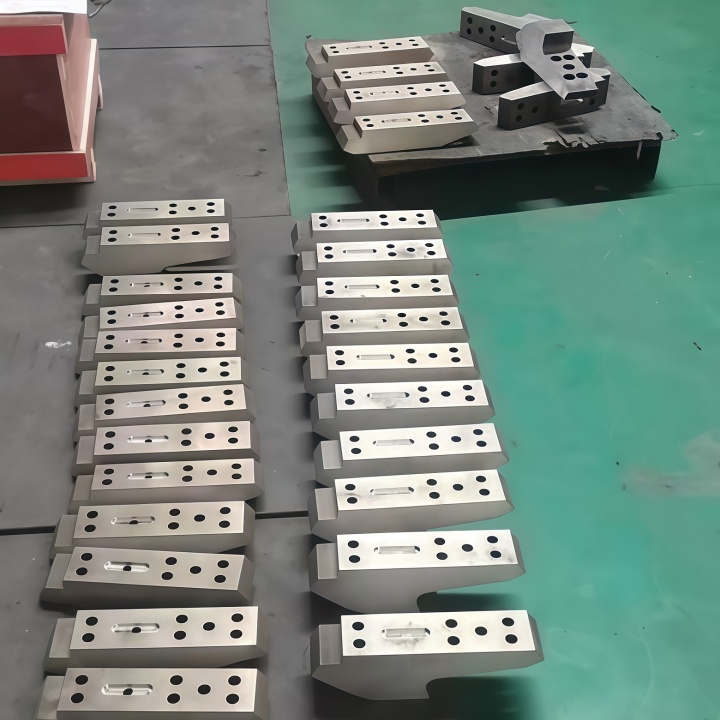
Single Shaft Shredder has a simple structure with insert‑type blades, typically featuring 4 cutting edges that can be rotated to extend service life. However, when metal or stones are present, blade chipping is a common issue.
Double Shaft Shredder Crusher blades are large forged hook‑type components, 80 to 250 mm in diameter. Per‑change costs are significantly higher than single‑shaft, but the full set of blades lasts 2 to 4 times longer under harsh conditions. Our factory's maintenance records show that Double Shaft Shredder Crusher units average about thirty percent less annual downtime than single‑shaft units.
One real customer testimonial: after switching to a Double Shaft Shredder Crusher, their downtime dropped from 4 to 5 days per month to less than 1 day. Less overtime for maintenance staff and fewer line stoppages — this calculation matters far more than the unit price of blades.
Space Requirements and Investment Budget
Single Shaft Shredder has a smaller footprint, suitable for production lines with limited space, with prices ranging from $15,000 to $80,000. Double Shaft Shredder Crusher is larger and heavier, requiring reinforced foundations, with prices ranging from $30,000 to $150,000.
But for applications involving tires, metals, and similar materials, the additional investment pays back over time. Our general recommendation is: if your budget allows, you have the space, and your material is complex — go directly with a double‑shaft unit or two‑stage configuration. Do not save money on a single‑shaft unit and regret it later.
Single Shaft Shredder vs Double Shaft Shredder Crusher: Core Comparison
| Dimension | Single Shaft Shredder | Double Shaft Shredder Crusher |
|---|---|---|
| Number of shafts | 1 | 2 |
| Rotor speed | 60‑150 RPM | 10‑40 RPM |
| Drive power | 30‑250 kW | 44‑400 kW |
| Output control | Screen‑controlled, uniform | No screen, inconsistent |
| Typical output size | 20‑120 mm | 30‑300+ mm |
| Suitable materials | Plastics, films, wood, textiles | Tires, metals, e‑waste, mixed waste |
| Throughput range | 300‑3,000 kg/h | 500‑10,000 kg/h |
| Feeding method | Hydraulic ram forced feed | Self‑feeding by shafts |
| Maintenance | Rotatable blades, frequent changes | Longer blade life, higher per‑change cost |
Two‑Stage Configuration: Double‑Shaft Primary + Single‑Shaft Secondary
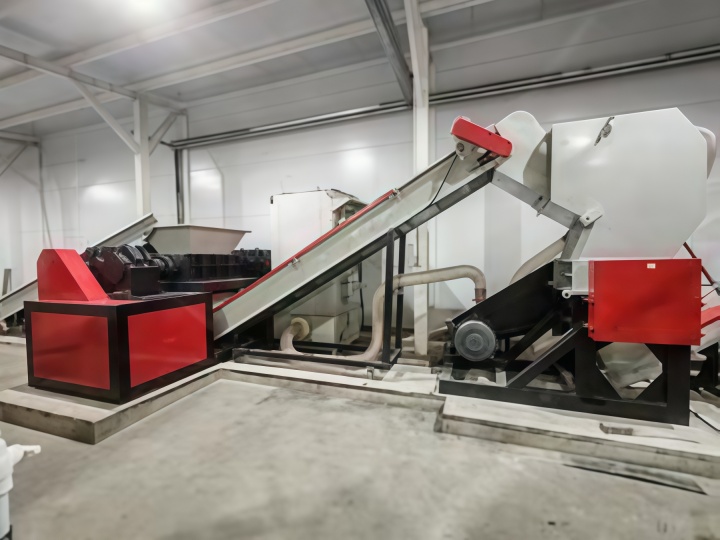
For complex materials such as tires, e‑waste, and mixed metals, the common configuration is to use a Double Shaft Shredder Crusher for primary shredding, followed by a Single Shaft Shredder for secondary shredding to achieve uniform output. Our factory has supplied this configuration to multiple production lines, and operational feedback has been consistently stable.
A practical detail: screen hole size is not always better when smaller. Switching from 40 mm to 20 mm screen holes reduces throughput by approximately thirty percent. Choose a larger screen hole size whenever it meets downstream particle size requirements — do not chase fineness blindly.
Common Selection Mistakes
Selection errors typically stem from misjudging material hardness, moisture content, and cleanliness. Below are three typical cases from real customer experiences with our factory.
Mistake 1: Using Single Shaft Shredder for steel‑belted tires. Steel wires wrap around the screen and cause blade chipping, leading to a week of repair downtime. The correct approach is to use a Double Shaft Shredder Crusher for primary shredding first, followed by downstream processing.
Mistake 2: Using Double Shaft Shredder Crusher directly for clean films. Output is too coarse to feed directly into washing or granulating lines. Double‑shaft units also tend to get tangled when processing flexible materials like films and ropes.
Mistake 3: Overlooking moisture content leading to capacity collapse. Our factory tests show that when moisture content exceeds ten percent, single‑shaft throughput drops by forty percent, while the Double Shaft Shredder Crusher remains largely unaffected.
Three‑Step Selection Process
Selection decisions should prioritize material type, output requirements, and capacity/space in that order. This is the sequence we follow when advising customers.
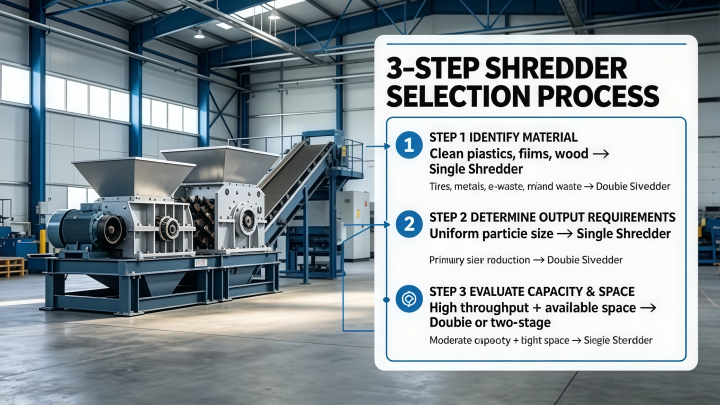
Step 1: Identify your material. Clean plastics, films, and wood — choose Single Shaft Shredder. Tires, metals, e‑waste, and mixed waste — choose Double Shaft Shredder Crusher.
Step 2: Determine output requirements. If you need uniform particle size for granulators or extruders — choose Single Shaft Shredder. If you only need primary size reduction with further downstream processing — choose Double Shaft Shredder Crusher.
Step 3: Evaluate daily throughput and floor space. If capacity demand is high and space is available — prioritize Double Shaft Shredder Crusher or a two‑stage configuration. If capacity is moderate and space is tight — Single Shaft Shredder is the more economical choice.
FAQ
How do blade replacement costs and frequency compare between Single Shaft Shredder and Double Shaft Shredder Crusher?
Single Shaft Shredder uses insert‑type blades with 4 cutting edges that can be rotated to extend service life. Double Shaft Shredder Crusher uses large hook‑type blades — per‑change costs are higher, but the full set lasts 2 to 4 times longer than single‑shaft units.
Which is better for high‑moisture materials — Single Shaft Shredder or Double Shaft Shredder Crusher?
Double Shaft Shredder Crusher has no screen, so it does not clog. Single Shaft Shredder relies on a screen, and moist materials will blind the screen, causing throughput to collapse.
Is there a significant noise difference between Single Shaft Shredder and Double Shaft Shredder Crusher?
Double Shaft Shredder Crusher runs at low speed, producing 75 to 85 decibels. Single Shaft Shredder runs at higher speeds, with some models exceeding 90 decibels.
Can Single Shaft Shredder and Double Shaft Shredder Crusher handle materials with metal contaminants?
Double Shaft Shredder Crusher has greater tolerance for metal contaminants. Single Shaft Shredder is sensitive to metals — we recommend installing magnetic separation equipment upstream.
Closing
Single‑shaft and double‑shaft shredders each have their own applicable scenarios. The key is knowing what material you are processing. Anyone in recycling knows this well: finding out your new machine cannot handle your feed is far worse than paying a little more upfront. Our factory has tested many materials and followed numerous production lines — the data and cases above are all real‑world accumulations. If you are unsure about a specific material, bring your material specifications and throughput requirements, and we will provide a configuration recommendation based on your actual operating conditions.