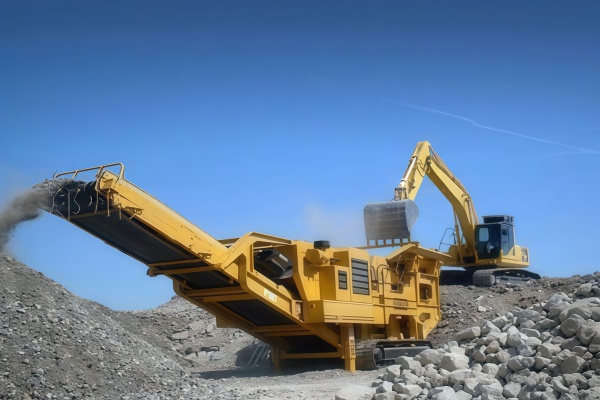
Mobile vs. Stationary Aggregate Crusher Machine – Which One Is Better for Your Project?
Saturday August-22 2026 09:15:24
Choosing the wrong Aggregate Crusher Machine costs far more than the price difference between equipment options. We have seen too many cases where a machine arrives on-site only to discover the ground cannot support its weight, or where half the profit is eaten up by haulage costs within months of startup, or where millions of dollars of fixed equipment end up as scrap when the project closes. Mobile or stationary? This decision is worth a solid 30 minutes of careful thought.
Over the past five years, we have been involved in equipment selection and operational tracking for dozens of aggregate projects—from installation and commissioning to daily operation and final disposal. These experiences have taught us that there is no absolute superiority between the two configurations. The key is matching the equipment to the project's actual conditions. In addition, semi-mobile equipment, which falls between the two, can serve as a compromise solution for medium-term projects.
Quick Decision Summary
The core of equipment selection is not the equipment price, but the cost per ton—the total expenditure for producing one ton of aggregate. For projects with a duration of less than 3 years and changing work sites, a mobile Aggregate Crusher Machine is the more reasonable choice. For projects exceeding 5 years with a fixed site and a focus on lower cost per ton, a stationary Aggregate Crusher Machine offers better long-term economics. A semi-mobile Aggregate Crusher Machine suits medium-term projects where the site is largely fixed but may need relocation in the future. Material hardness also affects equipment configuration—granite, basalt, and other hard rocks call for a jaw crusher plus cone crusher combination, while limestone and other soft rocks are better served by impact crushers. The combination of these three conditions broadly points to which type of Aggregate Crusher Machine you should choose.
Three Questions to Help You Get Oriented Quickly
Three factors—site stability, planned production duration, and material hardness—determine which type of Aggregate Crusher Machine is right for you.
First question: Is your project site fixed or does it change? If fixed, move to the second question. If it changes, go straight to a mobile unit.
Second question: How long do you plan to operate at this site? Under 3 years, consider a mobile Aggregate Crusher Machine. Between 3 and 5 years, consider a semi-mobile Aggregate Crusher Machine. Over 5 years, consider a stationary Aggregate Crusher Machine.
Third question: Are you processing hard rock or soft rock? Granite, basalt, and other hard rocks require cone crushers. Limestone and other soft rocks can be handled with impact crushers.
Mobile vs. Stationary Aggregate Crusher Machine – Comparison Table
| Factor | Mobile Aggregate Crusher Machine | Stationary Aggregate Crusher Machine |
| Setup Time | 1 to 3 days, no foundation required | 2 to 4+ weeks, extensive civil works |
| Footprint | Approximately 300 to 500 m² | Approximately 1,500 to 2,500 m² |
| Single-Line Capacity | Typically up to 500 tons per hour | Up to 750+ tons per hour |
| Purchase Price | 15% to 20% higher than stationary | Lower equipment price |
| Cost per Ton | Higher with diesel drive | Lower with grid power |
| Resale Value | 55% to 65% after 5 years | Very low after dismantling |
| Gradation Control | Primary crush outputs 2 to 5 inches | Precise multi-grade control |
A semi-mobile Aggregate Crusher Machine is close to a stationary unit in setup time and footprint, but its foundation structure is designed for disassembly and relocation, with a move typically taking 2 to 4 weeks.
Three Typical Costs of Choosing the Wrong Equipment
Misjudging site conditions, haulage distance, and project duration are three traps that can cost you dearly in equipment selection.
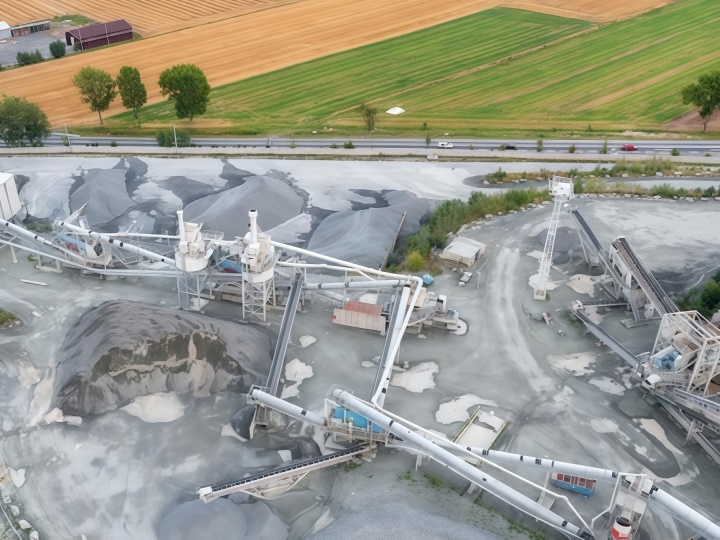
The equipment doesn't fit the site, forcing a last-minute change. We have seen cases where a stationary unit was already shipped, only to find on arrival that the bearing capacity of the foundation was inadequate—the soil beneath was all backfilled rubble. The rushed change not only lost the freight cost but also delayed the project by a full two months. Mobile equipment has lower foundation requirements—just leveling and compacting the ground is enough to get started.
Haulage costs eat into profits. A limestone quarry adopted a stationary setup. In the first two years, the mining face was only 800 meters from the crusher, with haulage costs under RMB 3 per ton. By year three, the face had advanced to 2.3 kilometers, pushing haulage costs to RMB 6.5 per ton—an extra RMB 2 million per year. If they had chosen a mobile Aggregate Crusher Machine to advance with the mining face, that money could have been saved entirely.
The equipment can't be removed when the project ends. A three-year highway project chose a stationary setup, investing RMB 1.8 million in foundations, steel structures, and conveyors. At project close, all of it was scrapped. Dismantling cost RMB 80,000, and scrap steel sold for less than RMB 100,000. Meanwhile, another section on the same project used a mobile setup and resold the equipment at 55% of its original price to the next site—a difference of over RMB 1 million between the two approaches.
Setup Time and Site Conditions – The Core Difference Between the Two Aggregate Crusher Machine Types
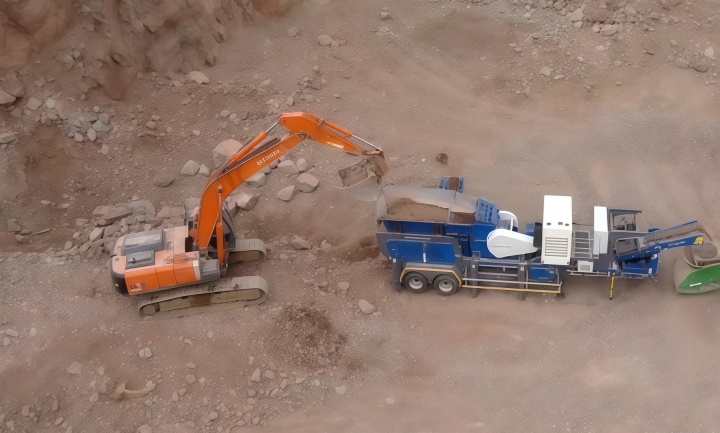
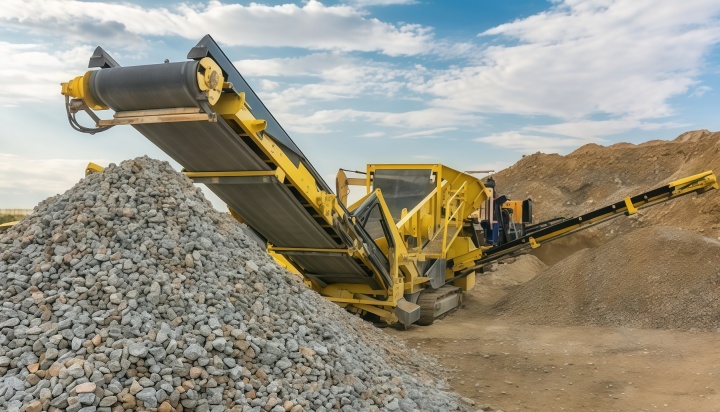
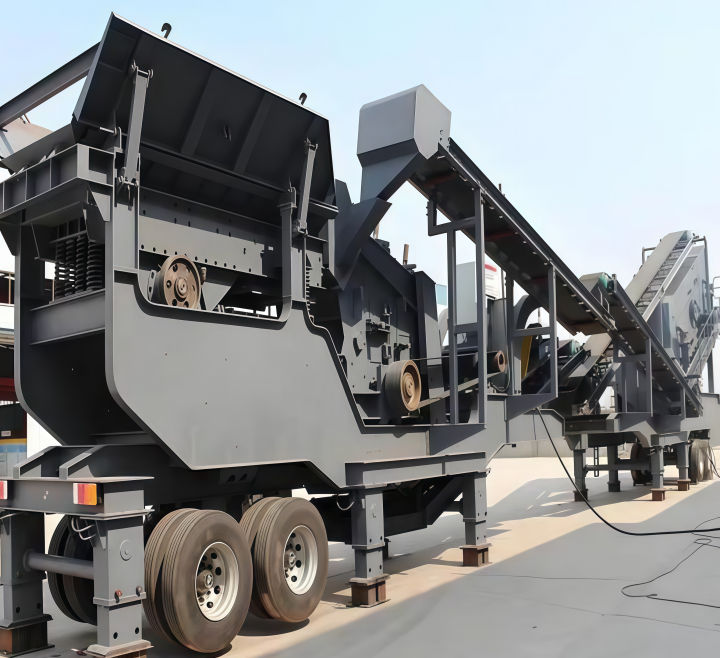
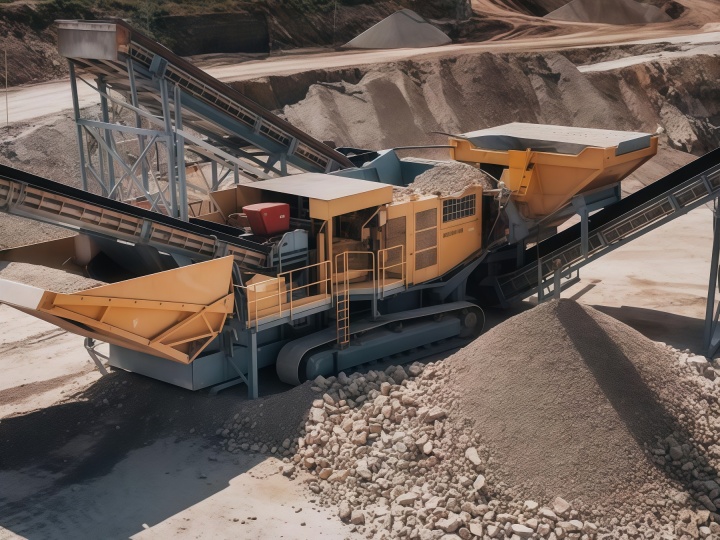
The time advantage of a mobile Aggregate Crusher Machine in the installation phase is striking. Equipment can go from arrival to production in just 1 to 3 days. After unloading, the hydraulic legs are extended and the unit leveled, then the folding conveyors are deployed and electrical control systems connected. A few minutes of no-load testing, and you are ready to feed material. A stationary unit is a completely different story—the equipment arrives and waits for concrete foundation curing to complete, then comes crane lifting and positioning, steel structure welding, long-distance conveyor installation, and power line routing. Every step depends on the one before it, and any delay in one area holds up the entire schedule.
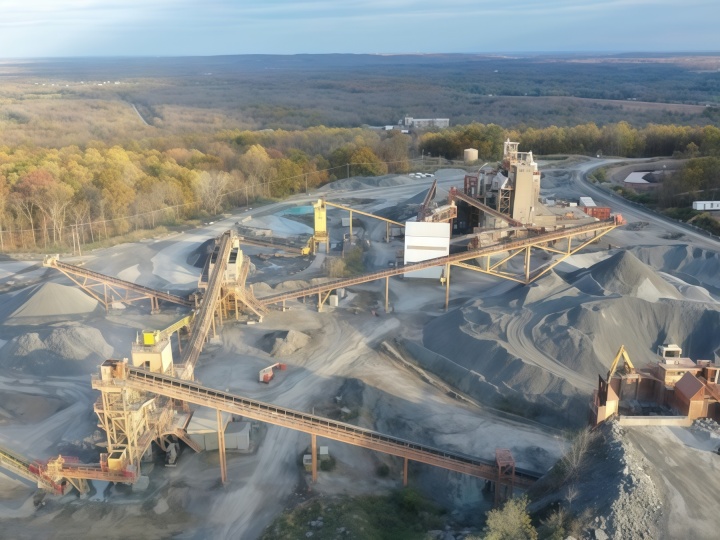
In terms of footprint, a mobile unit needs just 300 to 500 square meters at the same capacity, while a stationary plant typically requires 1,500 to 2,500 square meters. We encountered an extreme case where a client was processing construction waste on a temporary site with only 600 square meters available. A stationary layout was simply impossible—mobile was the only option.
Capacity and Output Quality – The Core Strength of Stationary Units
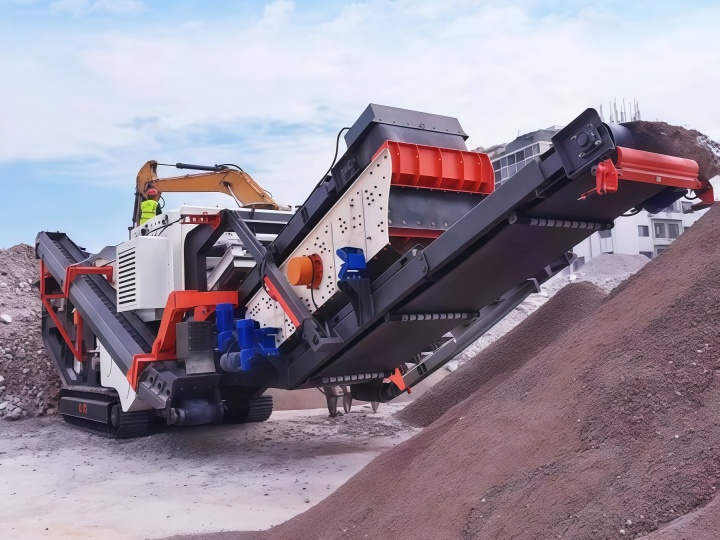
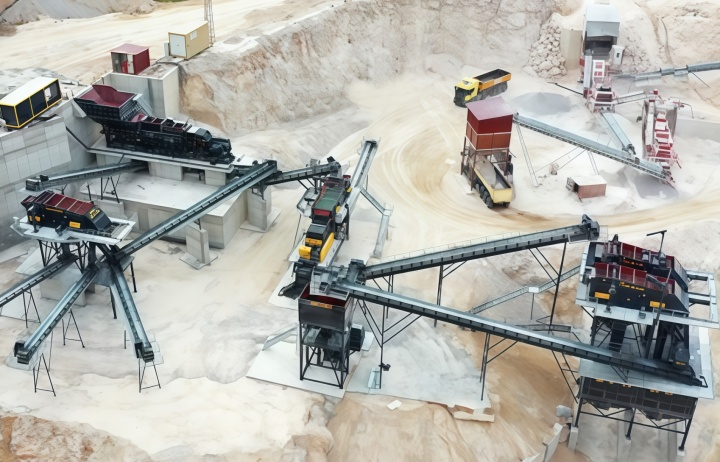
The single-line capacity advantage of a stationary Aggregate Crusher Machine is clear, reaching 750 tons per hour or more. Even more important is gradation control. A mobile unit's primary crushing typically produces 2 to 5 inch coarse material. To obtain marketable sizes like ¾ inch or 1 to 1.5 inches, the material must go through multiple recirculating and re-crushing cycles. Each recirculation means additional wear parts consumption and energy use. A stationary production line can flexibly combine multiple crushing stages and closed-circuit screening—material is pre-screened by vibrating screens before entering the crushing chamber, with only oversize material going to the crusher. This reduces over-crushing and unnecessary wear, producing multiple finished sizes in a single pass.
However, efficiency is not just about capacity. A mobile unit works directly at the extraction face, eliminating long-distance material haulage from the quarry face to a fixed crusher. We tracked two sets of data from the same quarry: the mobile solution had a haulage cost of RMB 3.2 per ton, while the stationary solution—with a 1.8-kilometer haul distance—cost RMB 7.8 per ton. On that single item alone, the mobile unit saved RMB 4.6 per ton. At an annual output of 500,000 tons, that is RMB 2.3 million saved per year.
Investment Cost and Cost per Ton – The Real Metric
The most common mistake in equipment selection is looking only at the purchase price. A mobile Aggregate Crusher Machine costs 15% to 20% more than a stationary unit, but it eliminates civil works costs. The foundation, steel structure, and installation labor for a stationary unit typically account for 20% to 35% of the total equipment price. We calculated a specific scenario: a 300-ton-per-hour project with a 3-year duration. The mobile solution's total cost of ownership was about 18% lower than the stationary option, with savings coming from civil works and resale recovery. But if the project duration extends to 8 years, the stationary unit's cost-per-ton advantage starts to show—annual cost per ton is 15% to 22% lower than the mobile unit, mainly from electricity cost differences and wear parts consumption.
A semi-mobile Aggregate Crusher Machine sits between the two in terms of foundation investment, with foundations that can be partially reused—making it suitable for medium-term projects.
Frequently Asked Questions
What does a mobile Aggregate Crusher Machine relocation actually involve?
Retract the hydraulic legs, fold the conveyors, and tow it with a tractor unit. Small units are done in hours; larger units with partial disassembly take 1 to 2 days.
Why does stationary plant permitting take so long?
It involves geotechnical surveys, foundation design, concrete pouring and curing, plus fixed-facility environmental impact assessments and construction permits. Delays in any one step stretch the entire timeline.
How do you choose crusher configuration for hard rock versus soft rock?
Granite, basalt, and other hard rocks use a jaw crusher plus cone crusher—the cone's compression crushing principle effectively handles highly abrasive material. Limestone and other soft rocks use impact crushers, whose impact breaking action produces better-shaped finished product. This principle applies to both mobile and stationary units.
What scenarios suit a semi-mobile Aggregate Crusher Machine?
Projects with a duration of 3 to 5 years, where the site is largely fixed but may need relocation in the future—such as phased mining operations or temporary production bases.
Mobile, stationary, and semi-mobile Aggregate Crusher Machine options are not about which is better—they are about which is the right match. Mobile units excel at flexible deployment, suited to short-term, multi-site projects with advantages in rapid relocation and strong resale value. Stationary units deliver high capacity and lower cost per ton, making them the more economical choice for long-term, large-scale production. Semi-mobile units are the compromise for medium-term projects.
The true measure of a correct selection is getting three numbers right: project duration, material characteristics, and cost per ton. Start by working through the "Three Questions" in this article to get your initial orientation, then evaluate against your specific project parameters. If you need further calculation, feel free to provide your project details.