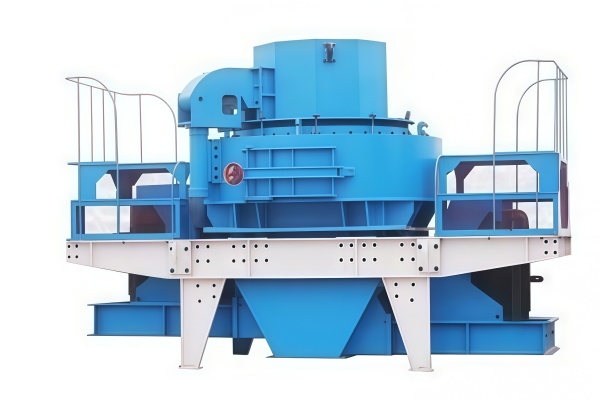
VSI Sand Making Machine Wear Parts Guide: Rotor Tips, Anvils, Liners and Maintenance Schedule
Thursday August-27 2026 13:53:07
Core Answer: Managing VSI Sand Making Machine wear parts comes down to selecting the right material based on abrasiveness and executing a maintenance schedule from daily inspections to data‑driven replacements.
Key Information at a Glance
Wear judgment: Rotor tips need replacement when protrusion length loss exceeds 40%
Material selection: Use carbide for highly abrasive materials, high‑chromium iron for medium‑abrasive materials
Maintenance frequency: Daily inspections, every 4 hours in high‑wear conditions
Troubleshooting: Check external feed first, then internal wear parts, then mechanical bearings
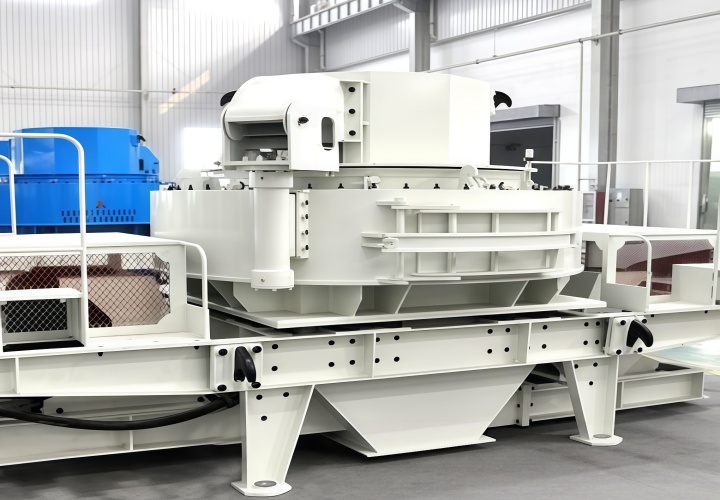
The core issue in managing VSI Sand Making Machine wear parts is not how the machine works, but knowing when to spend the money. How worn should rotor tips be before replacement? How much reduction in the anvil impact zone is too much? Is carbide worth three times the cost of high‑chromium iron? This guide cuts to the chase and provides judgment criteria and decision‑making rules for each component.
First, clarify the basic question: Is your VSI Sand Making Machine running in rock‑on‑rock or rock‑on‑iron mode? Rock‑on‑rock uses material impacting material, giving anvils a long service life but lower crushing efficiency, with wear costs around USD 0.10 to 0.30 per ton. Rock‑on‑iron uses material directly impacting anvils, offering stronger crushing force and better shaping, but anvils wear out significantly faster.
When Should VSI Sand Making Machine Rotor Tips Be Replaced?
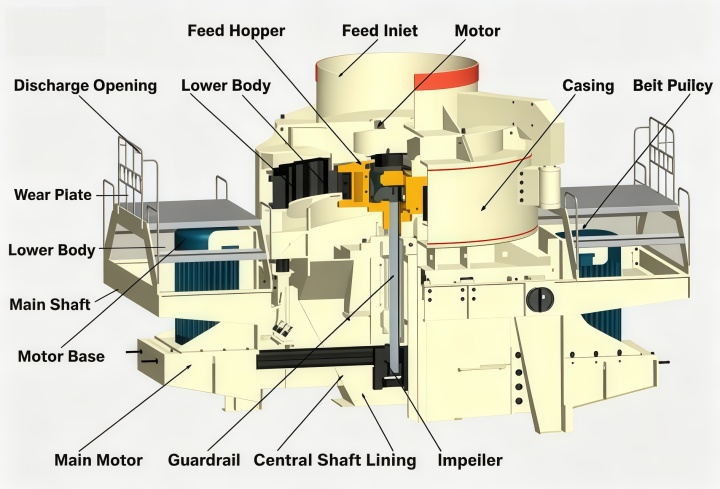
Rotor tips are mounted at the rotor outlet and directly propel the material. Tip wear shows as rounded working faces, chipped edges, or reduced thickness. When protrusion length loss exceeds 40% of the original size, the material can no longer be accelerated to the designed speed, and crushing efficiency drops noticeably. Tips must be replaced in matched sets to ensure consistent weight across all tips. Replacing only one tip will unbalance the rotor, causing severe vibration and potentially damaging bearings and the main shaft.
Wear rates vary significantly across tip materials: carbide tips wear at approximately 0.5 to 1.5 grams per ton, while high‑chromium iron wears at approximately 2 to 4 grams per ton. In hard granite processing, carbide tips cost about USD 0.12 per ton, compared to USD 0.18 for high‑chromium iron. Although carbide costs three to five times more upfront, the cost per ton is actually lower.
What to Do When VSI Sand Making Machine Anvils Wear Too Fast?
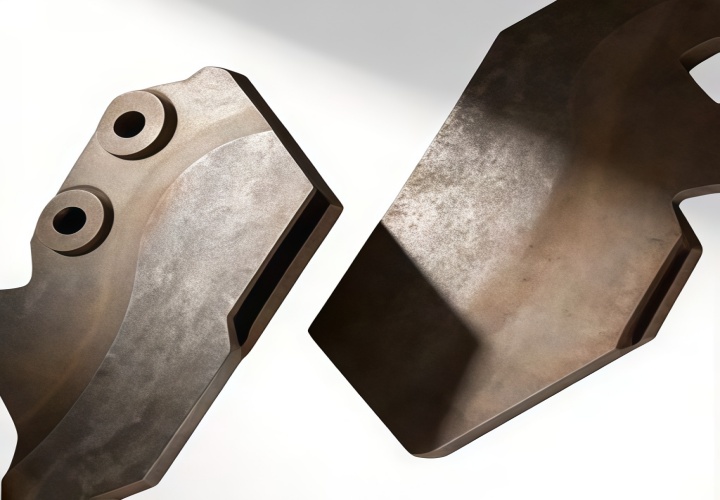
Anvils are mounted on the outer perimeter of the crushing chamber and serve as the core load‑bearing components in rock‑on‑iron mode. Material exiting the rotor directly impacts the anvil surface to complete the final crushing and shaping. Anvil wear appears as grooves or depressions in the impact zone. Replacement is needed when impact zone thickness loss reaches 40%. Waiting until anvils wear through often means irreversible damage has already occurred to the machine body. Higher rotor speeds and harder materials accelerate anvil consumption.
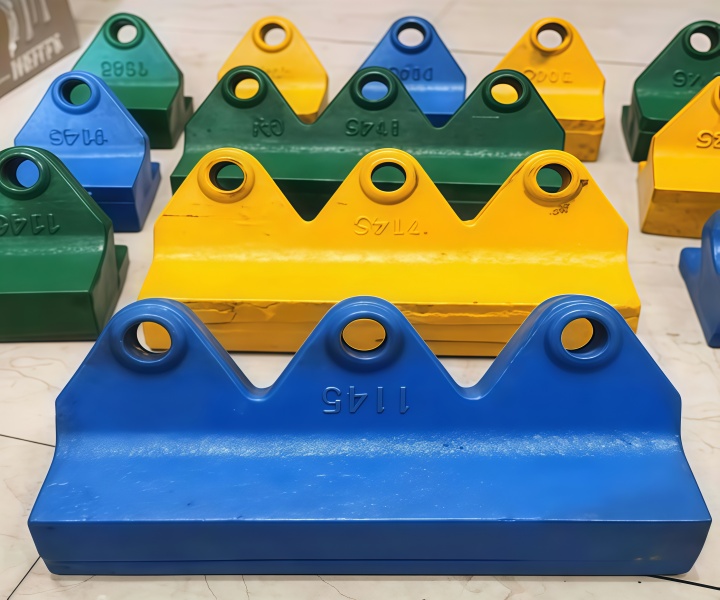
How to Maintain VSI Sand Making Machine Chamber Liners and Feed System?
Liners are mounted on the inner wall of the crushing chamber to protect the main frame from direct material impact. Uneven liner wear alters the crushing chamber geometry, causing material flow paths to shift and product particle shape to deteriorate. Liners must be replaced before wear exposes the frame. Depending on material abrasiveness, liner service life ranges from 1,500 to 2,000 hours.
The feed tube and distributor plate are equally critical. A worn feed tube creates a larger gap that causes uneven material distribution, while an unevenly worn distributor plate sends material disproportionately to one side, leading to excessive single‑side tip consumption. These components are relatively inexpensive individually, but the cascading issues they cause often cost dozens of times the component price.
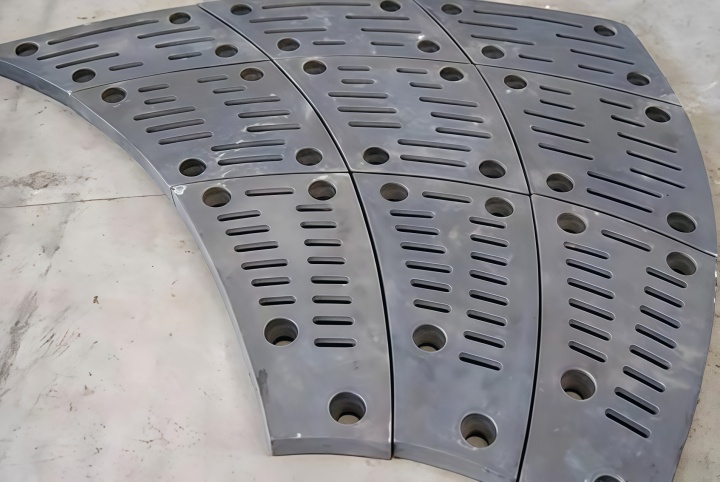
What Are the Other Key Wear Parts on a VSI Sand Making Machine?
Back‑up tips are installed behind the primary tips to protect the rotor body when primary tips wear out or break. Back‑up tips need replacement when the remaining carbide depth reaches only 3 to 5 millimeters.
Upper and lower wear plates are mounted inside the rotor to protect the rotor interior from circulating material wear. Trail plates help form a protective material bed inside the rotor. The feed eye ring is mounted on top of the rotor and can be rotated multiple times to extend its service life.
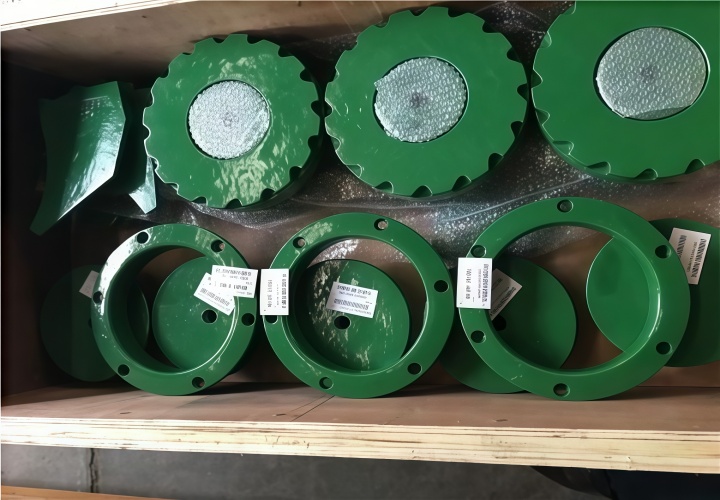
VSI Sand Making Machine Wear Material Selection: High‑Chromium Iron or Carbide?
| Material Type | Hardness | Suitable Materials | Wear Rate | Typical Service Life |
|---|---|---|---|---|
| High‑Chromium Iron | HRC 58‑65 | Limestone, river pebbles, medium‑abrasive materials | 2‑4 g/ton | 500‑1,000 hours |
| Tungsten Carbide Composite | HRA 86‑91 | Granite, basalt, quartz, highly abrasive materials | 0.5‑1.5 g/ton | 1,200‑2,000 hours |
| Ceramic Composite | HV 1600‑1800 | Medium‑high abrasive materials | Between the two | Between the two |
Carbide is suitable for materials with an abrasion index above 0.4 and continuous operation scenarios where downtime costs are high. High‑chromium iron is suitable when there is a risk of tramp iron contamination, feed hardness varies significantly, budgets are limited, or the site is remote with difficult access to spare parts.
Here is a concrete cost calculation example. Processing hard granite, assume throughput of 150 tons per hour, operating 16 hours per day. High‑chromium iron tips last approximately 600 hours, carbide tips last approximately 1,500 hours, and carbide tips cost approximately 3.5 times more per set than high‑chromium iron. The wear part cost per ton for high‑chromium iron is X divided by (600 times 150), which is X divided by 90,000. For carbide, it is 3.5X divided by (1,500 times 150), which is 3.5X divided by 225,000. Comparing these, carbide's cost per ton is approximately 93% of high‑chromium iron. Although the purchase price is 2.5 times higher, the cost per ton is lower. This is the difference between looking at unit price versus cost per ton.
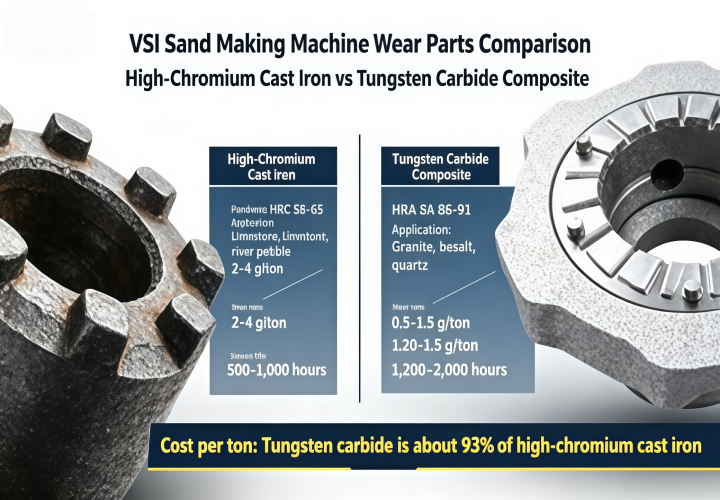
Material selection decision tree: If material Mohs hardness exceeds 7, choose carbide. If hardness is between 5 and 7 and production requirements are high, choose ceramic composite; if budget is limited, choose high‑chromium iron. If hardness is below 5, high‑chromium iron is sufficient.
VSI Sand Making Machine Maintenance Urgency Classification
The core maintenance principle is to record wear as it is found, replace when the standard is reached, and do not delay or compromise.
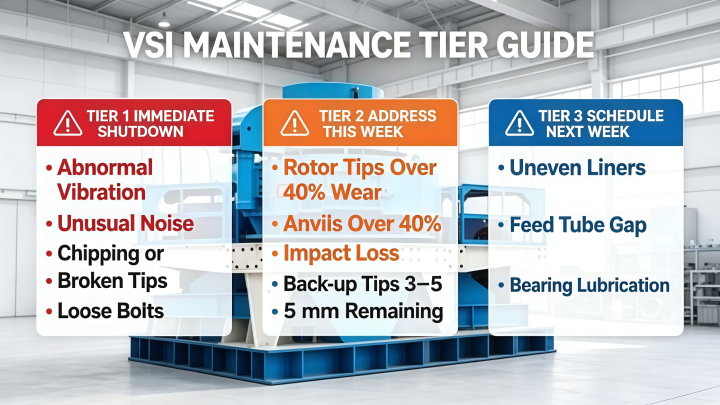
Tier One: Immediate Shutdown
Abnormal vibration, unusual noise, or periodic metallic impact sounds require immediate shutdown
Tips with chipping or breakage require immediate shutdown
Any loose bolts require immediate shutdown and tightening
Tier Two: Must Address This Week
Tips with protrusion length loss exceeding 40% should be scheduled for replacement this week
Anvils with impact zone thickness loss reaching 40% should be scheduled for replacement this week
Back‑up tips with only 3 to 5 mm of carbide depth remaining should be scheduled for replacement this week
Tier Three: Schedule for Next Week
Liners with uneven wear but not yet exposing the frame should go on next week's inspection list
Feed tube with increasing gap should go on next week's adjustment list
Bearing lubrication needing replacement should go on next week's maintenance list
Delaying replacement until a rotor or chamber is damaged costs multiple times the price of the wear parts themselves.
VSI Sand Making Machine Common Fault Troubleshooting
When encountering any abnormality with a VSI Sand Making Machine, ask three questions first: First, has today's feed size or hardness changed compared to yesterday? Second, how many hours have passed since the last tip replacement? Third, was the most recent wear part replacement done as a complete set? Most fault answers lie in these three questions.
The troubleshooting sequence is always: check external feed first, then internal wear parts, and finally mechanical bearings. For excessive vibration, first verify whether tips were replaced in matched sets and have consistent weight, then check for material buildup inside the rotor, and finally check for bearing damage. For sudden production drops, first verify normal feed flow, then check if tips or anvils are worn beyond limits, and finally check for screen blockages. For increased flat particles and poor shape, first check tip and anvil wear conditions, then confirm rotor speed matches material hardness. For abnormally fast wear part consumption, first check if feed size is too large, then check if feed distribution is even, and finally consider reducing rotor speed.
VSI Sand Making Machine FAQ
Q1: When does the VSI Sand Making Machine rotor body need replacement instead of just the tips?
The rotor body typically lasts through multiple tip replacement cycles, but replacement is necessary when plastic deformation occurs at the rotor outlet, cracks appear, or weld seams open. Regularly inspect rotor body weld seams and outlet edges, and if any cracks are found, stop immediately for evaluation.
Q2: How can you tell from sound whether VSI Sand Making Machine wear parts have failed?
When tips are severely worn, the sound of material impacting anvils or liners changes from sharp to dull. If periodic metallic impact sounds are heard, tips have likely worn through or broken, requiring immediate shutdown.
Q3: How often should the VSI Sand Making Machine back‑up tips be inspected?
Back‑up tips should be inspected whenever primary tips are replaced. If the remaining carbide depth on back‑up tips is only 3 to 5 millimeters, they should be replaced at the next scheduled shutdown.
Q4: How do moisture and clay in the feed affect VSI Sand Making Machine wear parts?
Excessive moisture causes material to build up and adhere inside the rotor and crushing chamber, changing material trajectories and intensifying localized wear. High clay content forms a layer on wear part surfaces, altering impact angles and accelerating uneven wear.
Q5: Do parameters need adjustment after changing VSI Sand Making Machine wear part suppliers?
After changing materials or suppliers, the existing maintenance cycle and speed settings may need fine‑tuning. Closely monitor wear performance during the first 50 to 100 hours of operation with the new parts and adjust subsequent inspection frequency accordingly.
Closing
VSI Sand Making Machine wear part management directly affects production line uptime, product quality stability, and cost per ton. Rotor tips control material ejection efficiency, anvils determine crushing effect, liners protect the machine body, and back‑up tips, wear plates, and feed tube safeguard the rotor assembly. Match material selection to feed characteristics, base maintenance intervals on data, and time replacements to clear standards. Once wear data accumulates, the answers to when to replace and what to choose will reveal themselves.