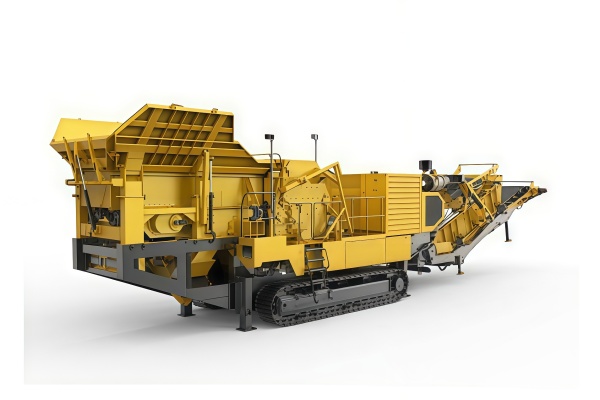
Tracked Mobile Crusher Maintenance: Daily, Weekly & Monthly Checklist
Friday August-28 2026 11:33:45
Introduction
Tracked Mobile Crusher maintenance boils down to three things: daily fluid level and abnormal noise checks, weekly lubrication and fastening inspections, and monthly core component examinations.
According to the Nesans India 2026 track maintenance guide, undercarriage maintenance costs account for 15% to 25% of the total equipment cost of a Tracked Mobile Crusher. A well‑maintained Tracked Mobile Crusher track system can achieve 8,000 to 12,000 operating hours, while a neglected system may require replacement at 4,000 hours. Track tension deviating more than ±3% from the manufacturer's specified value is one of the primary contributors to premature undercarriage wear.
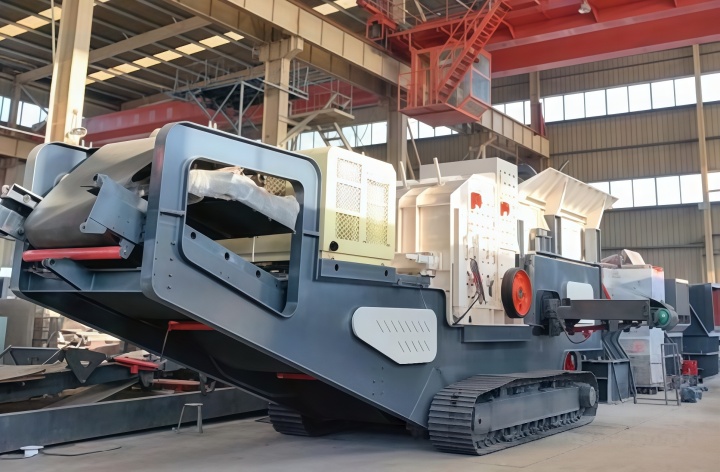
The running gear, crushing chamber, and hydraulic system of a Tracked Mobile Crusher are interdependent—issues in any one area will drag down the other two. Whether you are an equipment manager, site operator, or maintenance supervisor, this checklist lays out inspection items directly, without filler. The data is compiled from the Nesans India 2026 track maintenance guide, the TerraSpares 2026 track tensioning technical bulletin, and operating records from four units over 6,000 hours.
Daily Tracked Mobile Crusher Inspections
Daily inspections cover five areas: fluid levels and leaks, track undercarriage appearance, the crushing chamber and belts, safety devices, and abnormal noise and vibration.

Fluid Level and Leak Check. Check engine oil, hydraulic fluid, and coolant levels before starting. Visually inspect hydraulic line fittings, cylinder seals, and travel drive units for leaks.
Track Undercarriage Visual Inspection. Walk around the machine and check track pads for cracks. Inner‑link wear is often more severe than outer‑link wear, so crouch down to inspect the inner chain links and bushings. Rotate the track rollers and carrier rollers by hand—resistance or unusual noise indicates bearing damage. Steel track sag is typically set between 40 and 60 millimeters, but always confirm the specific value against the equipment's operation and maintenance manual.
Crushing Chamber and Belt Check. Open the crushing chamber to check for trapped debris and inspect jaw plates or liners for wear. Confirm belt tension and alignment before starting.
Safety Device Confirmation. Verify that all guards are in place and that emergency stop buttons and interlock systems are functional.
Abnormal Noise and Vibration Monitoring. Run the machine at idle for several minutes after start‑up and listen for unusual noises. Metallic knocking or severe vibration is a warning sign of component damage.
Weekly Tracked Mobile Crusher Inspections
Weekly inspections cover five areas conducted while shut down: the lubrication system, fasteners, the track system, the hydraulic system, and the electrical and control system.
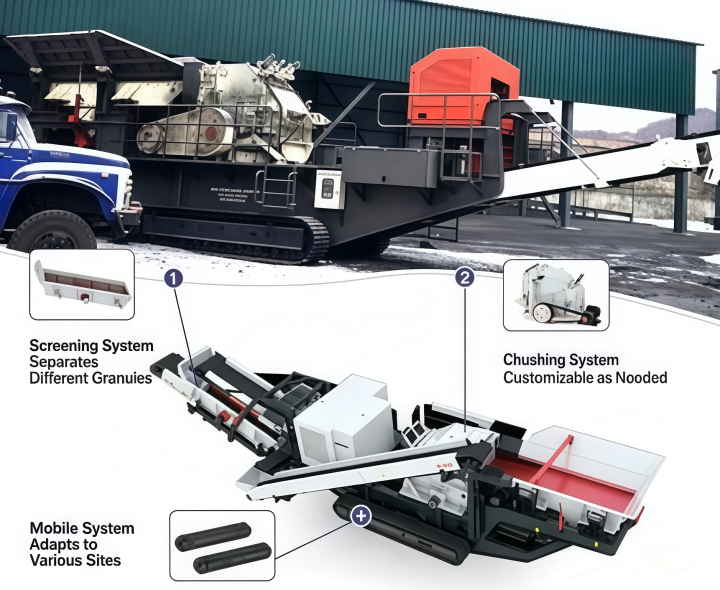
Lubrication System Check. Inspect oil levels and grease quality at all lubrication points on the Tracked Mobile Crusher. Grease that has turned black or shows signs of water emulsification has degraded and needs replacement. Grease volume should be kept at 50% to 70% of the cavity capacity.
Fastener Torque Check. Use a torque wrench to spot‑check frame bolts, motor base bolts, and crushing chamber liner bolts. Loose bolts generate high‑frequency vibration that accelerates structural fatigue and cracking.
Track System Specialized Maintenance. Measure Tracked Mobile Crusher track sag. Check chain link pins for axial movement and drive sprocket tooth wear—replace if wear exceeds 50% of the original height. Track tension must be measured with the system cold; when warm, the track expands and gives a falsely low sag reading. A 20°C ambient temperature swing can change track length by up to 8 millimeters, so consider running the machine for 45 to 60 minutes to let the track system reach thermal equilibrium before making final adjustments. Another easily overlooked detail: grease nipples on track tensioning cylinders often accumulate hardened old grease that blocks new grease from entering—scrape the hardened crust off the nipple with wire before each greasing.
Hydraulic System Pressure and Seal Check. Verify that hydraulic system pressure gauge readings are stable and check cylinder seals and fittings for leaks. Per ISO 4406 fluid cleanliness standards, the hydraulic system should be tested regularly for particulate contamination. Replace the filter element when the pressure differential exceeds the manufacturer's specified limit.
Electrical and Control System Check. Blow dust off motor cooling fins and the control enclosure with compressed air. Check terminal connections for looseness.
Monthly Tracked Mobile Crusher Inspections
Monthly inspections cover five major areas through detailed disassembly: the crushing unit core components, the running gear, all filters, machine connection points, and machine cleaning.
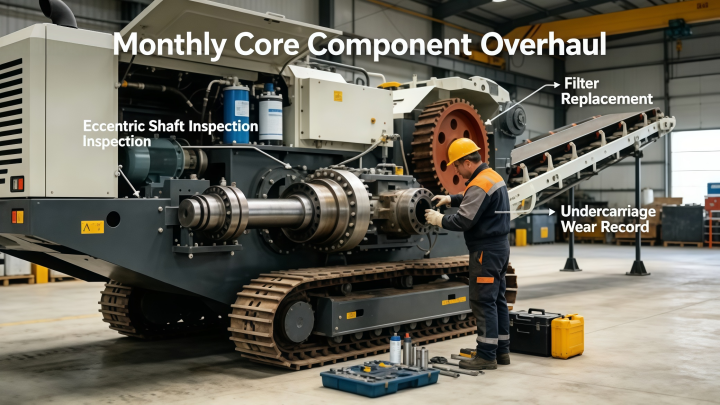
Crushing Unit Core Component Check. The eccentric shaft is the heart of a Tracked Mobile Crusher. Inspect journal wear, bearing clearance, and internal clearance. Open the bearing end caps to check grease condition—if grease is black and caked, completely clean and re‑grease. Also check flywheel rim wear and keyway bolts.
Running Gear In‑depth Check.Check travel drive oil level and quality. Measure and record wear on drive sprockets, idlers, and track rollers to build a wear trend file. Replace track shoes when the grouser height wears below 75% of the original height.
Filter Replacement. Change hydraulic and fuel filters according to operating hours. Clogged filters cause system pressure loss and fuel starvation.
Machine Connection Point Re‑torquing. Check all structural connection points, pipe flanges, and electrical connectors—these connections gradually loosen under vibration.
Cleaning and Rust Prevention. Use a pressure washer or compressed air to clean accumulated material and oil from the Tracked Mobile Crusher body. Failing to clear stone dust and mud trapped inside the track undercarriage accelerates seal wear and bearing corrosion.
Tracked vs. Wheeled Mobile Crusher Maintenance Differences
Users switching from wheeled mobile crushers to a Tracked Mobile Crusher often carry over old maintenance habits, which is a common source of problems. Tracked and wheeled units differ in inspection frequency, core wear components, component life, ground suitability, transport method, and overhaul intervals.
| Comparison Dimension | Tracked Mobile Crusher | Wheeled Mobile Crusher |
|---|---|---|
| Undercarriage Check Frequency | Daily track tension, track rollers, and idlers | Weekly tire pressure and tread wear |
| Core Wear Components | Track chain links, track pads, track rollers, drive sprockets | Tire tread, wheel bearings |
| Typical Component Life | Chain links 6,000‑10,000 hrs, pads 4,000‑8,000 hrs | Tires ~2,000‑3,000 hrs |
| Ground Suitability | Soft, muddy, uneven ground all workable | Requires relatively flat hard surfaces |
| Transport Method | Self‑propelled onto flatbed trailers, no crane required | Requires tow vehicle or flatbed transport |
| Major Overhaul Assessment | Evaluate undercarriage condition at 6,000‑8,000 hrs | Tire replacement cycle ~2,000‑3,000 hrs |
The data above is compiled from the Nesans India 2026 track maintenance guide and general industry maintenance knowledge. Track tension and wear inspection on all wheel stations are specialized skills that Tracked Mobile Crusher users must master—wheeled unit maintenance methods cannot be applied directly.
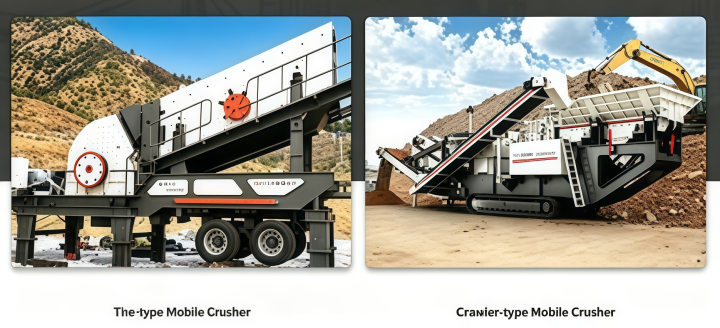
Seasonal Tracked Mobile Crusher Maintenance Adjustments
Seasonal adjustments target three conditions: rainy season with high humidity, hot weather, and cold‑weather starts. Each requires a different focus—water protection, hydraulic cooling, or warm‑up and track care.
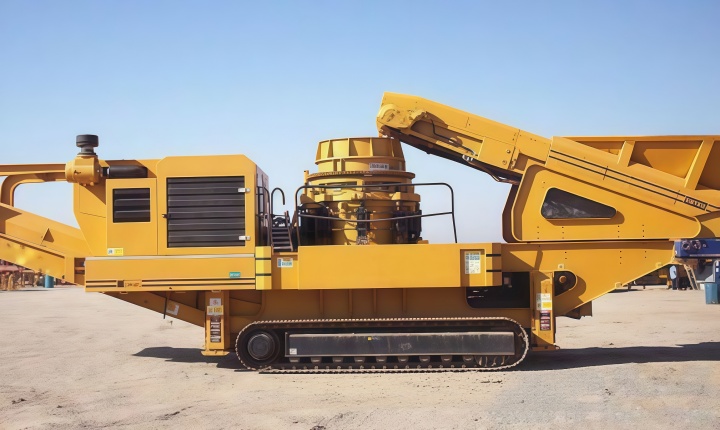
Rainy Season and High Humidity. Water ingress through track roller seals leads to bearing rust and seizure. Keeping the track system dry can extend bearing life by up to 40%. After rain, thoroughly clean mud and stone dust from the track undercarriage; after washing, run the machine unladen for two to three minutes to spin out residual moisture trapped in seal gaps. A full set of track rollers can cost tens of thousands of dollars to replace, with downtime of two days or more.
Hot Weather. When ambient temperatures exceed 35°C, add an extra hydraulic oil temperature check each day. If oil temperature exceeds 80°C, shut down and allow cooling. Check radiator fins for blockage. Hydraulic oil viscosity drops in high heat, so select a hydraulic oil grade that meets the manufacturer's high‑temperature operating requirements.
Cold‑Weather Starts. When temperatures drop below 0°C, warm up the machine before loading—raise oil temperature to operating range before applying load. Below ‑15°C, the risk of rubber track tearing increases noticeably; avoid sharp turns. A 20°C temperature swing changes track length by 8 millimeters, so in cold conditions, re‑measure sag after the track reaches thermal equilibrium.
Common Tracked Mobile Crusher Maintenance Mistakes
Three common mistakes cluster around track tension, grease application, and filter replacement. Correcting these is more effective than simply increasing inspection frequency.
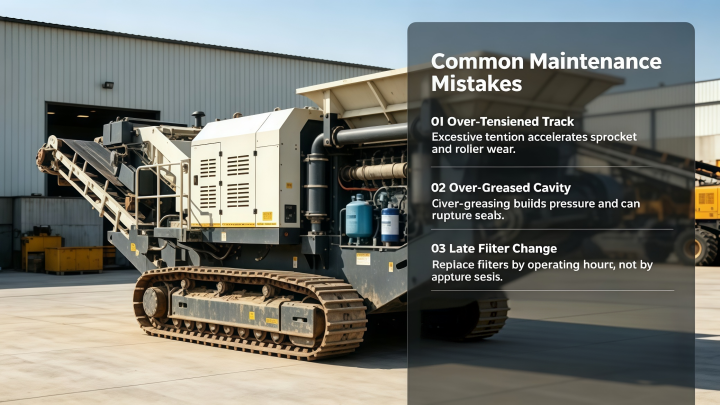
Mistake 1: Tighter Track Tension Is Always Better. Excessive tension dramatically increases wear on drive sprockets, track rollers, and chain links. When a track is too tight, reducing sag by two inches can add up to 4,000 pounds of extra tension. Adjust according to cold sag values rather than by feel.
Mistake 2: More Grease Is Always Better. Over‑greasing builds excessive cavity pressure that can rupture seals, allowing contamination ingress. Apply grease at the specified volume and frequency.
Mistake 3: Change Filters Only When Clogged. Replacement is based on operating hours, not visual appearance. Fiber fatigue and bypass valve spring degradation cannot be judged by sight.
Conclusion
A well‑maintained Tracked Mobile Crusher track system achieves 8,000 to 12,000 operating hours; a poorly maintained unit may need undercarriage replacement at 4,000 hours. There are only two criteria to judge maintenance effectiveness: Is cold track sag within the manual‑specified range? Does the filter change log match operating hours one‑to‑one? If both criteria are met, this Tracked Mobile Crusher's reliability already exceeds most job site averages.
FAQ
Q: What should I do when a Tracked Mobile Crusher's tracks sink on soft ground?
Tracks can sink 300 to 500 millimeters when left stationary on soft ground for extended periods. Lay steel plates or road mats to spread ground pressure, clear material from beneath the track before moving, and avoid sharp turns that exacerbate sinking.
Q: What causes a Tracked Mobile Crusher's crushing chamber to clog frequently?
Oversized feed material or excessive moisture content are the primary causes. Control feed size to stay within the crusher's maximum allowance, reduce feed rate when material moisture is high, and consider installing a vibrating screen ahead of the feed chute.
Q: How can I quickly diagnose a Tracked Mobile Crusher that veers during travel?
Veering is usually caused by uneven track tension between the two sides. Shut down, check ground level, measure cold track sag on both sides, and use the grease gun to adjust tension to the standard range.
Hydraulic system pressure drops on a Tracked Mobile Crusher with no visible leaks?
Clogged filters or internal pump bypass are common hidden causes. Start by checking filter pressure differential; if the filters are clear, test pump output pressure to determine if internal wear is causing bypass.