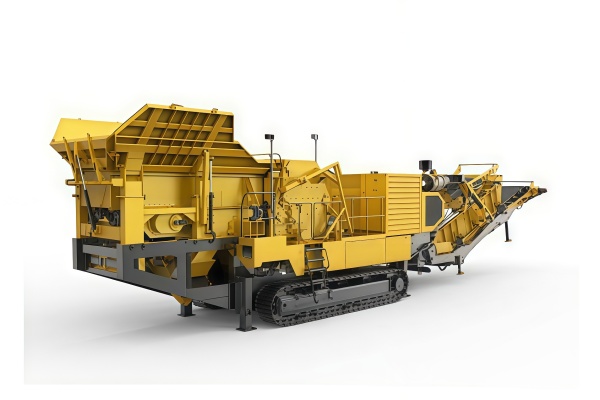
Tracked Mobile Crusher Fuel Consumption and Operating Cost: A Complete Guide
Friday August-28 2026 11:37:19
A Tracked Mobile Crusher typically consumes 28 to 45 litres of diesel per hour, with comprehensive operating costs ranging from RMB 5.5 to 8.5 per tonne of material. The exact figures depend on three variables: material hardness, power system configuration, and operational efficiency. This article draws on globally verifiable industry reports and actual project operation records to break down the fuel consumption patterns and cost structure of this equipment, while providing a directly applicable cost estimation framework.
Our factory has years of production and operational experience in the mining machinery sector. The cases and data cited in this article are sourced from publicly verifiable industry reports, official equipment manufacturer test data, and actual project operation records from around the world.
Tracked Mobile Crusher Fuel Consumption Benchmarks
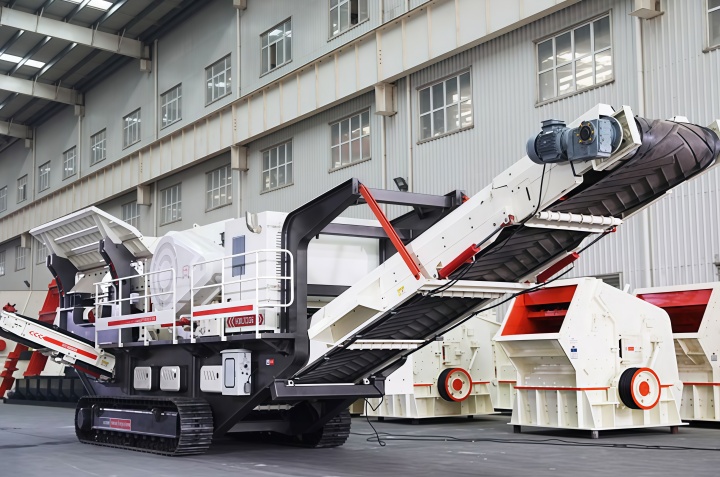
Fuel consumption varies considerably across different models and working conditions. According to industry benchmark data, a mid‑sized unit typically consumes 28 to 45 litres per hour, and can reach 40 to 45 litres per hour when crushing hard rock such as granite or basalt.
The following table presents industry fuel consumption benchmarks:
| Equipment Type | Hourly Fuel Consumption | Fuel per Tonne | Practice Target |
| Mid‑sized Mobile Jaw Crusher | 28‑45L | 0.15‑0.25L/tonne | Below 0.18L/tonne |
| Mobile Cone Crusher | 35‑55L | 0.18‑0.28L/tonne | Below 0.22L/tonne |
| Mobile Impact Crusher | 40‑65L | 0.20‑0.32L/tonne | Below 0.25L/tonne |
A machine equipped with a load‑sensing hydraulic system can reduce fuel consumption by approximately 25%. Fox Group in the United Kingdom replaced its diesel‑hydraulic crusher with an Omega J1065T electric‑drive Tracked Mobile Crusher at its Preston operation site. The upgrade reduced fuel consumption from 25 litres per hour to approximately 10 litres per hour, delivering annual fuel savings of approximately £25,000 to £30,000. Different technical pathways can result in fuel consumption gaps of several times over.
Operating Cost Components
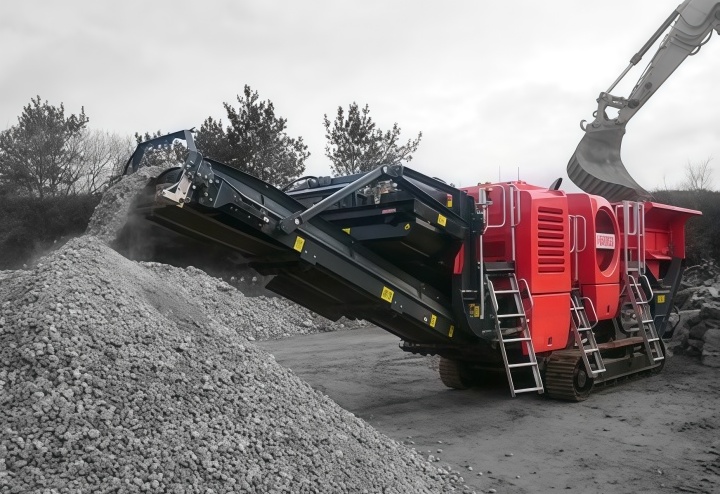
The operating cost of a Tracked Mobile Crusher consists of four core components: energy, wear parts, maintenance, and depreciation. Energy costs account for the largest share, followed by wear parts. Maintenance and depreciation costs are relatively stable but accumulate significantly over time.
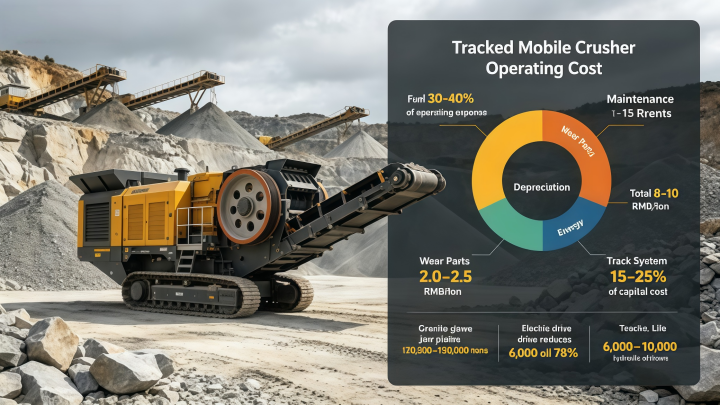
Energy costs typically represent 30% to 40% of operating expenditure. Banner Contracts in the UK operates two Metso Lokotrack LT106 units at the Lafarge Tarmac Thrislington quarry. Six months of operational data showed average fuel consumption of approximately 15.5 litres per hour, representing a saving of 9 litres per hour per unit compared to the previous LT105 model, a 35% reduction.
Wear parts costs: In granite operations, high‑manganese jaw plates can achieve a service life of 120,000 to 150,000 tonnes. In the granite quarries of Jiangxi and Fujian, China, wear parts costs are approximately RMB 2.0 to 2.5 per tonne.
Maintenance costs: The track system accounts for 15% to 25% of the total capital cost of this equipment. With proper maintenance, track chains and track pads can achieve a service life of 6,000 to 10,000 hours. All‑electric or hybrid‑driven models offer comparative advantages in maintenance costs. Sandvik QH443E reduces hydraulic oil usage by 78% through electric drive technology.
Combining all factors, the comprehensive operating cost per tonne for this equipment in Chinese hard rock projects is approximately RMB 8 to 10 per tonne.
Fuel Consumption and Cost Comparison Across Power Configurations
The following comparison data is compiled from actual test data from multiple global equipment manufacturers, showing the real‑world performance of equivalent‑class Tracked Mobile Crushers across different power configurations.
| Power Configuration | Hourly Fuel/Electricity Consumption | Annual Energy Cost | 5‑Year Total Operating Cost |
| Pure Diesel‑Hydraulic Drive | 28‑45L diesel | $18,000‑$25,000 | ~$150,000 |
| Diesel Generator Set + Electric Motor | 10‑15L diesel | $4,000‑$6,000 | ~$45,000 |
| Dual‑Power / All‑Electric | 10L diesel or mains power | $4,000‑$6,000 | ~$35,000 |
A dual‑power Tracked Mobile Crusher delivers energy cost savings of 60% to 70% compared to pure diesel models. The initial purchase cost is 10% to 15% higher, with a payback period typically ranging from 18 to 24 months based on actual project data from Taurian customers.
Selection recommendations: For project sites with stable mains power and annual operation exceeding 1,500 hours, the dual‑power configuration is the more cost‑effective choice. For remote sites with frequent relocation, the diesel generator set plus electric motor configuration offers greater flexibility. Pure diesel‑hydraulic drive is suitable only for short‑term projects or extremely limited budgets.
Real‑World Case Study: Granite Quarry Operations in Jiangxi/Fujian, China
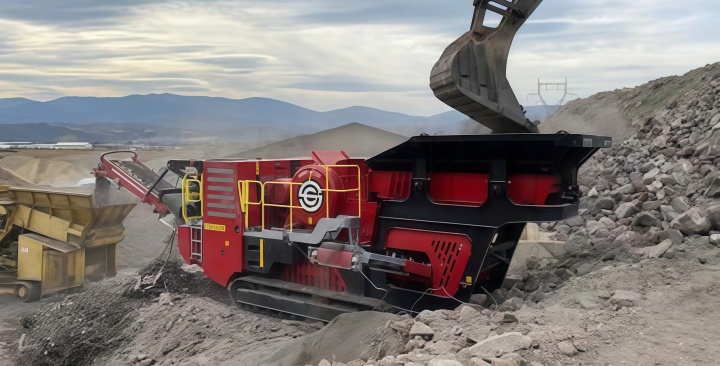
During 2025 to 2026, granite quarries in Jiangxi and Fujian, China faced considerable cost pressures. High‑hardness granite resulted in frequent jaw plate replacements. Combined with rising fuel prices, comprehensive operating costs reached RMB 10 to 15 per tonne.
A medium‑sized quarry in northern Fujian replaced its equipment with a Tracked Mobile Crusher. After more than six months of operation, the results were as follows: throughput of 200 to 230 tonnes per hour, with high‑manganese jaw plates achieving 120,000 to 150,000 tonnes per set, extending service life by over 40% compared to similar equipment. The dual‑power system operated in electric mode where the grid was available, achieving energy costs of approximately RMB 0.8 to 1.0 per tonne. Cost breakdown: wear parts RMB 2.0 to 2.5/tonne, fuel/electricity RMB 2.5 to 3.0/tonne, labour and maintenance RMB 1.5 to 2.0/tonne, depreciation RMB 1.5/tonne. The final comprehensive cost was approximately RMB 8.5 per tonne, representing a saving of 20% to 40%.
Key Factors Affecting Fuel Consumption and Cost
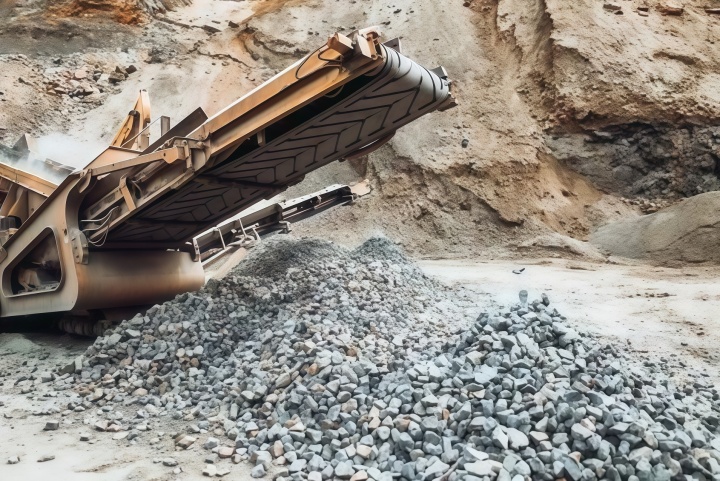
Material hardness is the primary factor. Fuel consumption when processing limestone versus granite can differ by more than 30%. Operational efficiency also has a considerable impact. Data from Banner Contracts in the UK shows that after optimising the operational process, its Lokotrack LT106 achieved fuel savings of 9 litres per hour per unit.
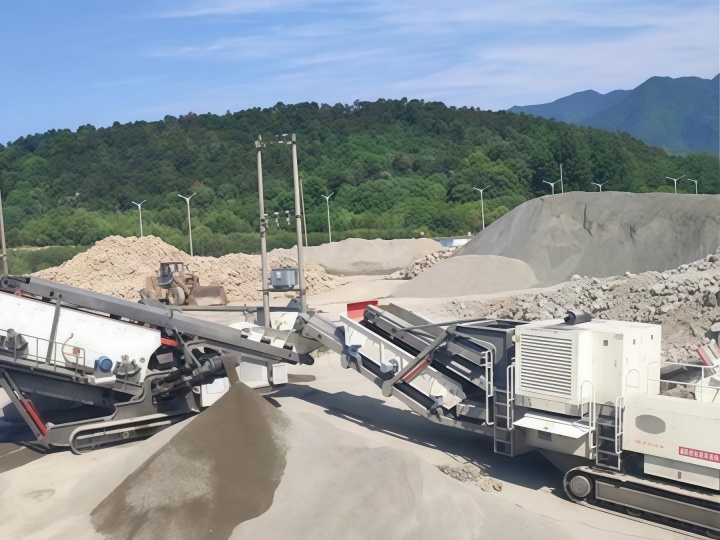
Power system selection is a core variable. SBM Mineral Processing conducted tests on the REMAX 600 at the Ramsau quarry in Austria, recording average fuel consumption of 34 to 46 litres per hour. The unit features a hybrid electric‑drive system that delivers diesel savings of 30% to 50% compared to full‑hydraulic equipment. Sandvik UJ443E all‑electric model achieved a 25% reduction in fuel consumption and a 30% increase in throughput. Whether the equipment selection matches project requirements also directly impacts cost performance.
Cost Estimation Method
Total operating cost consists of energy, wear parts, maintenance, and depreciation. Three dimensions are recommended for cost tracking.
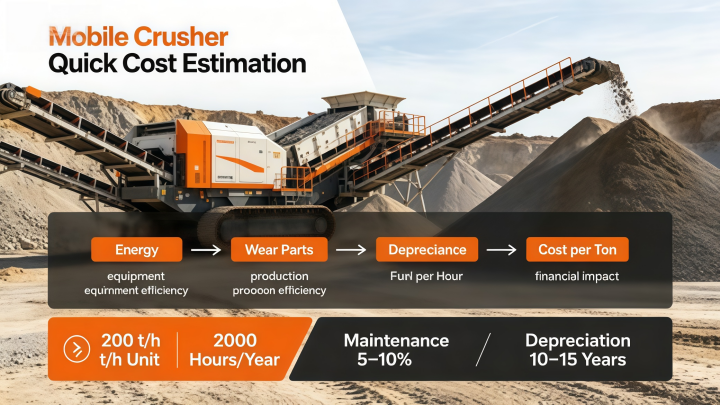
Hourly fuel consumption: Total fuel used divided by engine operating hours, reflecting equipment efficiency baseline
Fuel per tonne: Total fuel used divided by tonnes processed, reflecting production efficiency
Cost per tonne: Total fuel cost divided by tonnes processed, reflecting financial impact
Using a 200‑tonne‑per‑hour machine as an example, with 2,000 operating hours per year. Energy costs depend on the power configuration and local energy prices. Wear parts costs depend on material abrasiveness. Maintenance costs are approximately 5% to 10% of equipment annual value. Depreciation is typically calculated over 10 to 15 years.
How to Effectively Reduce Fuel Consumption and Operating Costs
Reducing operating costs can be approached from four directions: proper equipment selection, operational process optimisation, data‑driven management, and industry trend awareness.
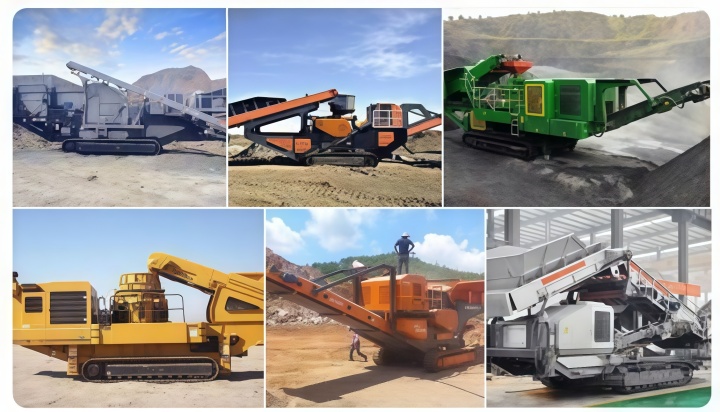
Proper equipment selection: Choose the appropriate specifications based on project requirements, with priority given to dual‑power drive. Taurian customers in India switched from pure diesel to hybrid power, achieving monthly fuel cost savings of approximately INR 1.8 million.
Operational process optimisation: Maintain stable feeding and smooth discharge, minimising frequent idling and choking. Establishing a systematic fuel consumption benchmark management system can reduce fuel costs by 10% to 25%, as demonstrated in industry practice.
Industry trend awareness: Hybrid‑drive and all‑electric equipment are becoming mainstream in 2026. Terex Powerscreen launched the Premiertrak 500E hybrid‑electric model in 2026, capable of reducing operating fuel costs by up to 60%. Sandvik's all‑electric series achieves a 25% reduction in fuel consumption and a 30% increase in throughput compared to previous‑generation products.
Tracked Mobile Crusher FAQ
What is the recommended maintenance interval for Tracked Mobile Crusher track systems?
Track chains and track pads can achieve a service life of 6,000 to 10,000 hours with proper maintenance. It is recommended to inspect track tension and wear every 500 hours.
How does the operating cost of a Tracked Mobile Crusher compare to a wheeled mobile crushing station?
It depends on relocation frequency and site conditions. The tracked configuration offers advantages in frequent relocation and complex terrain, while wheeled equipment delivers lower costs in long‑distance road transport and stable layout scenarios.
What factors affect the resale value of a Tracked Mobile Crusher?
Units meeting the latest emission standards and with well‑maintained core components command higher premiums in the second‑hand market. Depreciation is typically calculated over 10 to 15 years.
How should initial investment and long‑term operating costs be balanced when purchasing a Tracked Mobile Crusher?
Total cost of ownership should be calculated using the estimation framework in Section VI. A dual‑power unit has a 10% to 15% higher purchase price, but the project‑level payback period is typically 18 to 24 months.
Conclusion
The fuel consumption and operating costs of a Tracked Mobile Crusher are collectively influenced by four core factors: material characteristics, power system configuration, operational efficiency, and management level. From Fox Group in the UK reducing hourly fuel consumption from 25 litres to 10 litres, to the granite quarry in Fujian, China achieving a comprehensive cost of RMB 8.5 per tonne, to the Sandvik all‑electric model delivering 25% fuel reduction and 30% throughput increase—power system selection and operational process optimisation remain the key leverage points for cost control.
In 2026, hybrid‑drive and all‑electric models are becoming mainstream. Terex Powerscreen Premiertrak 500E can reduce operating fuel costs by up to 60%, while SBM REMAX 600 saves 30% to 50% diesel compared to full‑hydraulic equipment. Total cost of ownership analysis is the more objective basis for decision‑making. It is recommended that you apply the estimation method in Section VI to calculate the 5‑year total cost of ownership for shortlisted models based on your specific project conditions.