Wheeled Mobile Crusher Price Guide 2026
Saturday August-22 2026 12:59:35
A standard wheeled mobile jaw crusher (100–150 TPH) is priced at$110,000–$180,000FOB (China or India). However, the chassis itself accounts for only about 60% of your total budget. Hidden costs – freight, customs duties, tires, and generators – often add 30%–50% to the final landed price.
2026 Price Table by Model and Capacity
| Model Type | Capacity (TPH) | Price Range (USD) | Best For |
|---|---|---|---|
| Mini / Small Jaw | 30–80 | $60,000 – $95,000 | Urban demolition, small quarries |
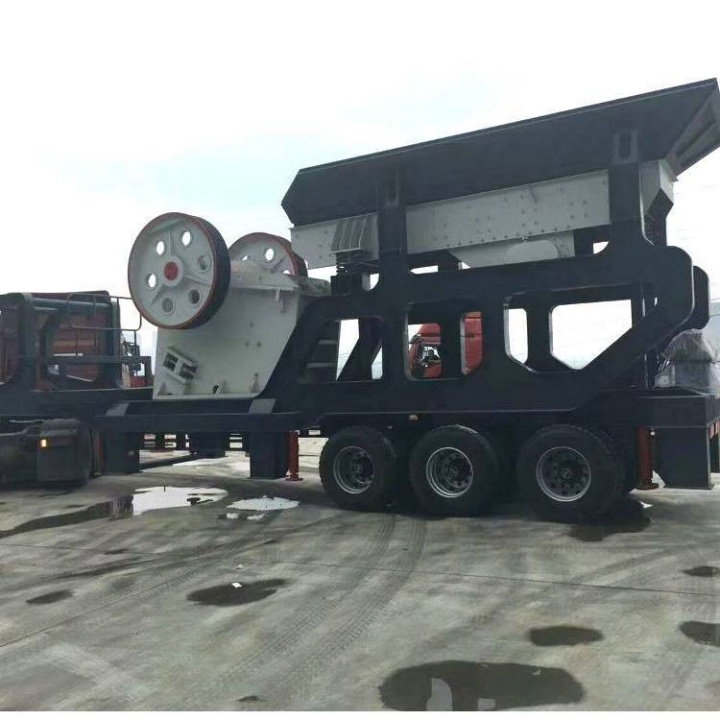
| Standard Jaw Mobile Plant | 100–180 | $110,000 – $190,000 | Primary crushing, hard rock |
| Impact Crusher Mobile Plant | 100–200 | $120,000 – $210,000 | Recycling, soft rock, better shape |
| Cone Crusher Mobile Plant | 150–300 | $220,000 – $420,000 | Secondary/tertiary, hard rock mining |
| Large Combo Plant (Jaw+Cone) | 300+ | $450,000 – $800,000+ | High‑output large mines |
5 Key Factors That Actually Affect the Price
Crusher Type (Jaw vs. Cone vs. Impact) – On the same chassis, a jaw is cheapest, a cone is most expensive.
Upgrading from jaw to cone adds roughly $30,000–$60,000.
Power System (Electric vs. Diesel-Electric Hybrid) – Pure electric is cheaper but requires a grid connection or a local transformer. Diesel-electric hybrid (with built-in genset and fuel tank) costs 15%–25% more but works in remote areas without power.
Tire Configuration and Axles – Single-axle (two axles) tows easily but has limited load capacity; tri-axle provides more stability and higher load, adding $5,000–$8,000.
Automation (PLC touchscreen vs. manual buttons) – Systems with intelligent monitoring and automatic discharge setting add $8,000–$20,000, but they can save the annual salary of two operators.
Wear Steel Grade (liner thickness and material) – Mn13 manganese is standard; Mn18 or chrome-alloy upgrades cost $3,000–$6,000 more but double the liner life.
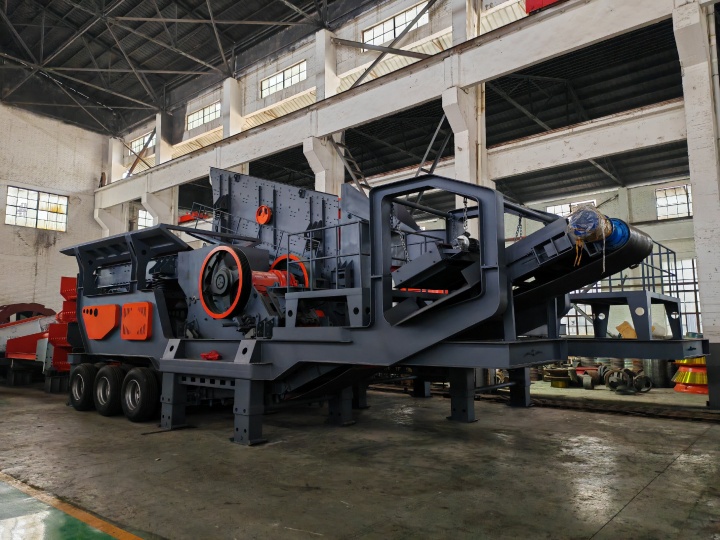
Hidden Costs of a Wheeled Mobile Crusher
Don’t just look at the machine price – these are the real budget-eaters:
Ocean Freight & Insurance (FOB vs. CIF) – A unit usually fills at least two 40-ft high-cube containers. Currently, freight from Asia to the US/Europe ranges from$2,500 to $6,000(depending on port and season). If the supplier quotes FOB, you must cover this freight yourself.
Import Duties and VAT – Rates vary by country. The US charges about 5%–10%, while some European countries may levy 15%–25%. Always check your local HS code.
Tire Replacement– A set of four heavy-duty tires costs roughly$4,000–$7,000 and needs replacement every 2–3 years.
Genset (if not built-in) – For the pure-electric version, you will need to buy or rent a transformer or generator locally, which costs about $10,000–$25,000.
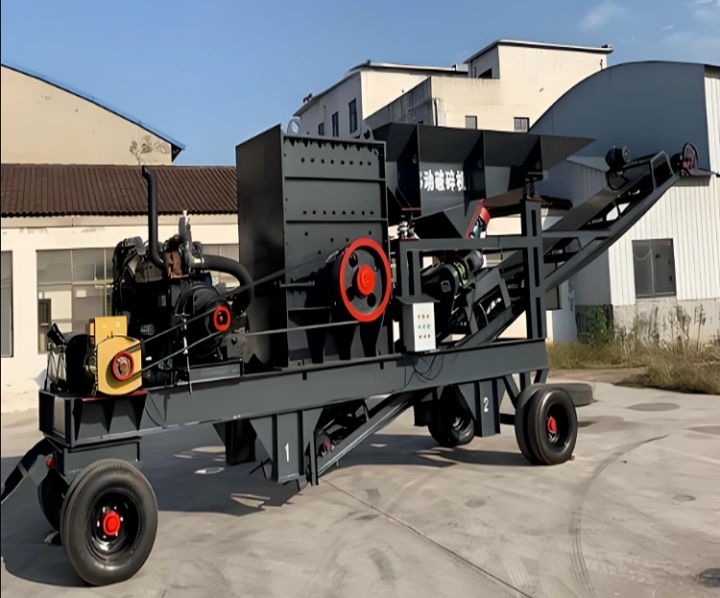
Wheeled vs. Tracked – Which One Saves You More?
| Attribute | Wheeled (Tire) | Tracked (Rubber or Steel Tracks) |
|---|---|---|
| Price | $60k – $400k | $150k – $700k+ |
| Advantages | Cheaper, easy to tow on highways, no track wear costs | Self‑propelled, no need for a tow truck, suitable for muddy sites |
| Disadvantages | Needs a semi‑truck to move; less stable on soft ground | Fast track wear, high replacement cost ($8k–$15k per set) |
| Best Application | Quarries, road projects, frequent relocations | Mine sites, rough terrain, areas without roads |
Comparison Wheeled (Tire) Tracked (Rubber or Steel Tracks)
Cost-saving tip: If 90% of your operation is on hard surfaces and relocation distances are short, choose wheeled – you will save at least 30% on initial investment.
How to Get the Lowest and Most Accurate Quote
When sending an inquiry to suppliers, always include these 5 pieces of information – otherwise they will give you an inflated “general” price:
Maximum feed size (e.g., 600 mm).
Target output (e.g., 150 TPH).Material type (limestone vs. granite – hardness significantly affects configuration).
Power preference (electric or diesel).
Destination port (for freight calculation).
Frequently Asked Questions (FAQ)
Q: What is the cheapest wheeled crusher?
A: A domestic small 50-TPH jaw plant starts at around $60,000.
Q: Why are cone mobile plants so expensive?
A: The cone crusher body requires precision casting and high-strength alloy steel, which is much more difficult to manufacture than jaw plates – hence the higher cost.
Q: Can I fit my own tires?
A: Yes, but they must match the load capacity and speed rating specified by the manufacturer – otherwise there are safety risks. We recommend buying original tires.
If you need a more precise budget estimate for a specific working condition (e.g., 200 TPH, crushing granite, delivered to a Southeast Asian port), let me know the parameters and I will give you a reference price range immediately.