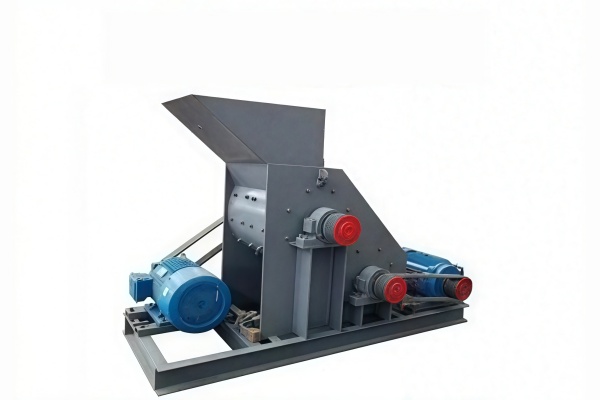
Granite Twin-Rotor Sand Maker for Concrete Batching Troubleshooting: Common Issues and Fixes
Friday September-04 2026 10:33:33
Concrete batching plants typically require manufactured sand with a fineness modulus between 2.3 and 3.0. For every 0.2 increase in fineness modulus, concrete slump loss increases by approximately 10 to 15mm. For every 0.2 decrease, cement consumption per cubic meter increases by about 8 to 12 kilograms to maintain the same strength grade.
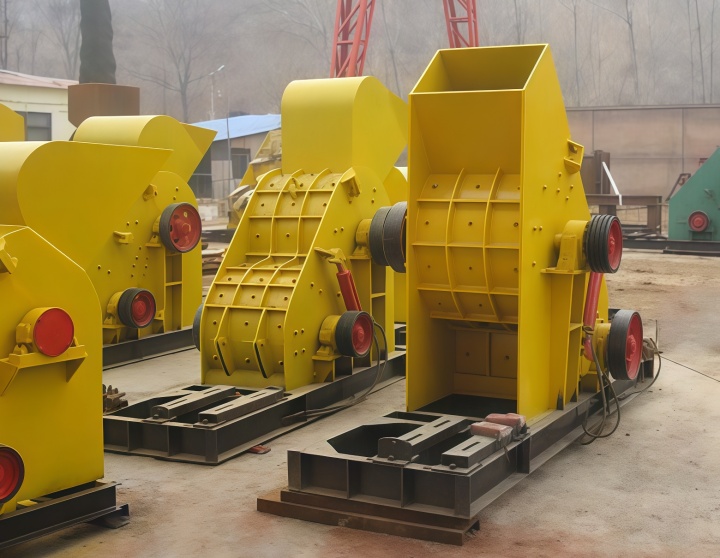
The Granite Twin-Rotor Sand Maker for Concrete Batching uses a dual-rotor counter-impact crushing method to process granite with Mohs hardness of 7 or above into well-shaped manufactured sand. It is widely used in batching plant aggregate systems across various regions. However, the highly abrasive nature of granite means equipment failure is simply a matter of time.
During prolonged continuous operation, issues such as rotor wear, bearing temperature rise, and belt loosening gradually emerge. The following five high-frequency faults and their solutions, compiled from frontline service experience, are provided to help site personnel quickly pinpoint problems.
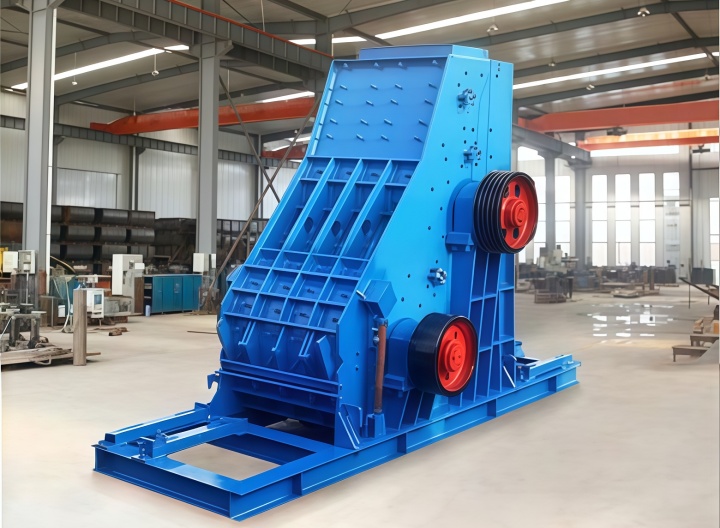
Excessive Body Vibration—Granite Twin-Rotor Sand Maker for Concrete Batching Operating Unsteadily
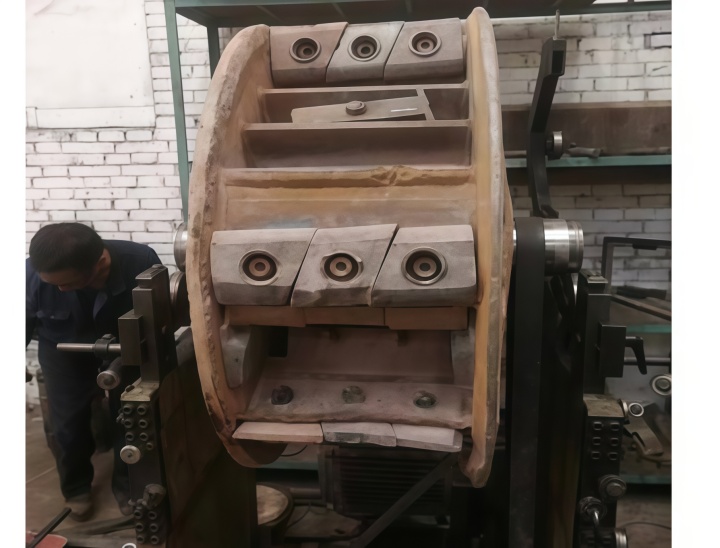
The equipment suddenly developed severe vibration in the fourth month of operation. Inspection revealed that one of the three rotor hammer sets had worn prematurely, causing a serious dynamic balance deviation. The rotor speed of this sand maker typically ranges from 1200 to 1500 RPM, and uneven wear amplifies vibration amplitude.
One easily overlooked detail: if resistance feels inconsistent when manually turning the rotor after shutdown, it almost certainly indicates uneven hammer wear. Replacement must be done as a complete set. After replacement, mark the coupling, and after half an hour of operation, turn the rotor again to verify dynamic balance restoration.
Also check whether the feed contains stones exceeding 40mm. Measure hammer thickness with a vernier caliper every 200 hours, and replace when the thickness difference within the same set exceeds 3mm.
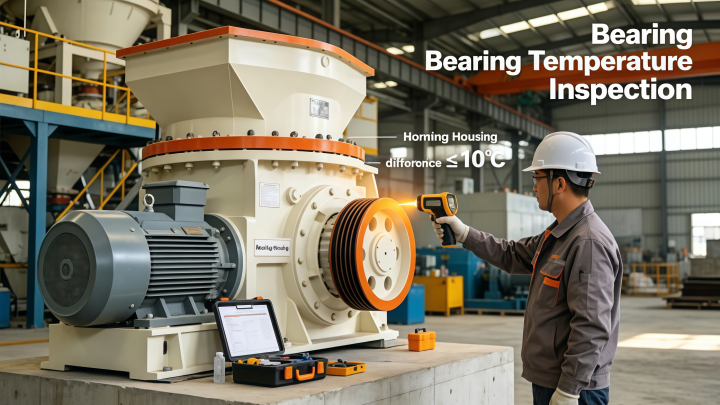
Abnormal Bearing Temperature Rise—Granite Twin-Rotor Sand Maker for Concrete Batching Cooling Failure
Bearing temperature exceeding 85°C requires immediate shutdown. One site case shows that when bearing temperature persistently exceeded 95°C without timely shutdown, the bearing raceway eventually suffered spalling damage, with repair time exceeding 8 hours. The main shaft bearings on this equipment are spherical roller bearings.
Grease should be replenished every 400 hours, filling to two-thirds of the bearing cavity—over-greasing actually generates heat. Using an infrared thermometer to compare temperature difference between the bearing housing and the surrounding frame is effective; a normal difference should be within 10°C. Check weekly whether the seal cover gap exceeds 0.5mm, as dust ingress accelerates temperature rise.
Compare bearing operation sounds on both sides using a stethoscope; a sharp clicking sound indicates damaged rollers.
Excessive Discharge Particle Size—Granite Twin-Rotor Sand Maker for Concrete Batching Crushing Performance Degraded
When the fineness modulus rises from 2.6 to above 3.2, first check V-belt tension. This sand maker uses dual motor drives, and the two V-belts must have consistent tension. When applying approximately 30 Newtons of pressure at the midpoint of the belt drive, deflection should be between 10 and 15mm.
One batching plant experienced oversized discharge due to one loose belt, with clear current imbalance between the two motors. After re-tensioning, the fineness modulus returned to 2.8. When replacing hammers, check the clearance between new hammers and old liners—if it exceeds 6mm, the material will not receive sufficient impact.
A practical technique is to measure clearance at the discharge opening with a feeler gauge after replacement, and adjust the discharge opening width to approximately 12mm.
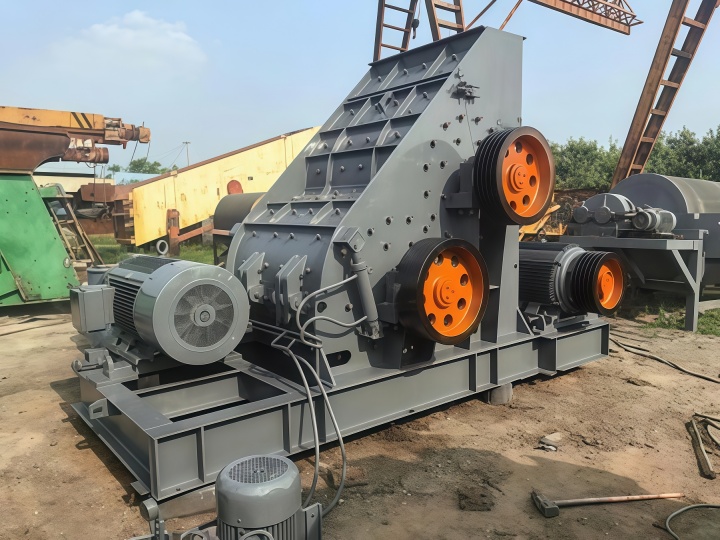
Abnormal Impact Noise During Operation—Granite Twin-Rotor Sand Maker for Concrete Batching Internal Component Looseness
Impact noise typically comes from two sources: loose liner bolts falling into the crushing chamber, producing a low-frequency irregular sound; or metal debris mixed with the granite, such as hammer fragments or excavator teeth, creating a sharp high-frequency collision sound. The procedure is to shut down, open the inspection door, and use a strong flashlight to check for visible gaps between liners and the rotor.
Low-frequency dull impacts mostly come from the lower crushing chamber; high-frequency sharp sounds mostly come from near the rotor. Use a metal detector or magnetic bar for spot checks on the conveyor belt material each shift to reduce the risk of metal debris entry.
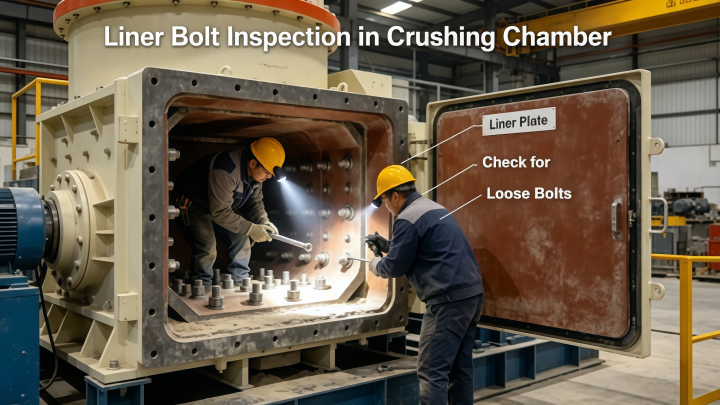
Sudden Shutdown or Material Blockage—Granite Twin-Rotor Sand Maker for Concrete Batching Production Interruption
Blockage clearing typically takes over 2 hours. Monitoring the ammeter is a reliable way to detect early warning signs: no-load current is approximately 40% of rated current, and under load it stabilizes between 75% and 85%. When current continuously exceeds 90% and slowly climbs, it indicates material accumulation inside the chamber, requiring feed reduction.
If current fluctuates significantly but discharge volume decreases, material is accumulating inside the crushing chamber; if current remains elevated but discharge volume is normal, the problem is likely at the discharge opening. When completely blocked, use a copper bar to remove material piece by piece—do not strike the rotor directly with a steel hammer. For granite with moisture content exceeding 5%, install a vibrating screen for dewatering.
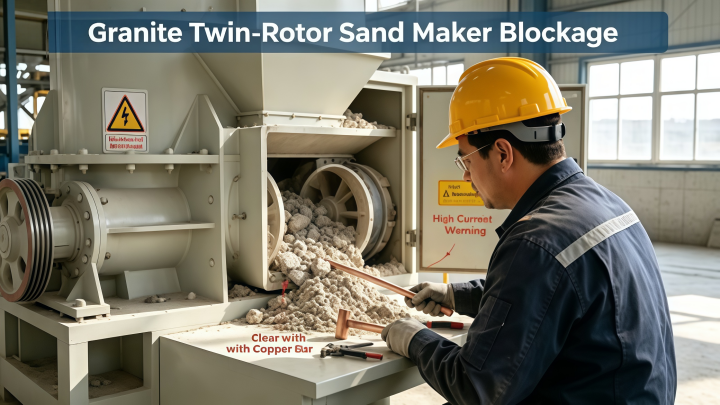
Daily Maintenance Checklist—Preventing Granite Twin-Rotor Sand Maker for Concrete Batching Sudden Failures
Preventive maintenance focuses on several weak points most likely to cause failures, including lubrication system condition, connection tightness, and wear part condition. The table below summarizes the inspection frequency and execution standards.
| Inspection Item | Frequency | Standard |
|---|---|---|
| Lubricant level and cleanliness | Per shift | Level not below sight glass centerline, no metal particles |
| Connection bolt tightness | Per shift | Torque wrench spot check, no looseness |
| V-belt tension | Per shift | 10 to 15mm deflection under 30N pressure |
| Grease replenishment | Every 400 hrs | Fill to two-thirds of bearing cavity |
| Bearing cleaning and oil change | Every 2000 hrs | Thoroughly clean old grease, replace with fresh |
| Seal cover gap check | Weekly | Gap not exceeding 0.5mm |
| Filter metal particle check | Weekly | No visible metal particles |
Sites following the above standards typically experience 12 to 18 hours of annual downtime due to failures; sites not following standards commonly exceed 60 hours.
Performance Optimization—Improving Granite Twin-Rotor Sand Maker for Concrete Batching Efficiency
Based on site data: feed particle size below 25mm results in lower power consumption and more uniform wear; rotor speed at 1350 RPM keeps fineness modulus stable at approximately 2.7; no-load current difference between the two motors should be within 5%. After each wear part replacement, set the discharge opening to 12mm to balance output and particle shape.
Frequently Asked Questions—Granite Twin-Rotor Sand Maker for Concrete Batching User Inquiries
Daily questions typically center on three areas: material adaptability, parameter adjustment, and maintenance details.
Q1: How can lubricant system issues be prevented during continuous operation of the Granite Twin-Rotor Sand Maker for Concrete Batching?
Check oil level and quality each shift, and replenish grease every 400 hours.
Q2: Does feed material containing clay or fine powder affect the Granite Twin-Rotor Sand Maker for Concrete Batching?
Clay and fine powder tend to adhere when exposed to moisture. Pre-feeding screening is recommended to control clay content below 3%.
Q3: Can a variable frequency drive be used to adjust discharge fineness on the Granite Twin-Rotor Sand Maker for Concrete Batching?
Yes—every 100 RPM increase reduces fineness modulus by approximately 0.2, but must be set according to granite hardness.
Q4: What is the discharge opening adjustment range for the Granite Twin-Rotor Sand Maker for Concrete Batching, and how often should it be adjusted?
5 to 20mm, depending on required product fineness. Recalibrate after each wear part replacement.
Closing Remarks
Mastering the diagnostic approaches for the five faults above effectively equips the Granite Twin-Rotor Sand Maker for Concrete Batching with a field emergency response and prevention system, minimizing the impact of unscheduled downtime on batching plant aggregate supply.
When troubleshooting, three variables—granite hardness, moisture content, and total running hours—directly affect diagnostic priority. For bearing temperature issues, equipment with less than 2000 running hours should prioritize lubrication checks, while equipment exceeding 4000 hours should first investigate bearing fatigue.